

Why are young people like me among the most politically engaged, yet the least likely to vote?
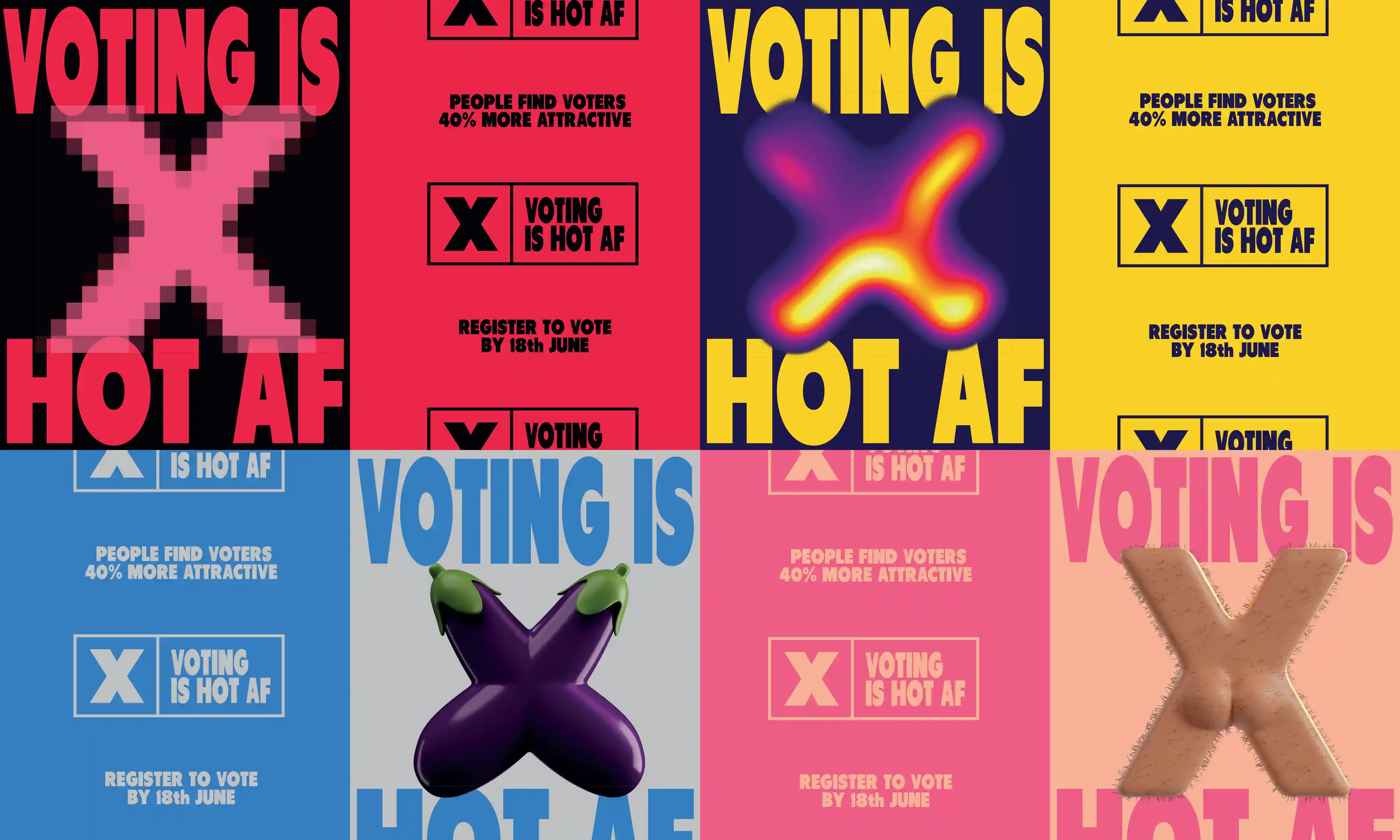
An image from a campaign to boost voter turnout among the young. Photograph: Saatchi
Shockingly, only 54% of 18 to 25-year-olds voted in the last general election, with even lower turnout at local elections. In stark contrast, an estimated 77% of those over 65 voted in 2019. This disparity has created a toxic cycle: politicians ignore young voters, young people fail to see any relevance in the ballot box, and policies become increasingly skewed towards the interests of older generations.
Hearing that, you might conclude that young people are simply not politically engaged. But research shows that those between 18 and 25 are the most likely to participate in political activities such as signing petitions, attending protests, or engaging with political issues on social media. So why doesn't this politically active group take the next crucial step of voting? The answer lies in a fundamental disconnect: they don't believe their vote will change anything.
This raises a critical question: Are young people disengaging from politics because they feel ignored, or are politicians ignoring them because they perceive young people as less engaged? Recent events suggest it may be the latter.
The introduction of stringent voter ID laws by Johnson's government appeared to actively suppress young voices, making it harder for them to vote. This move was particularly troubling given that young people often have the least power and personal capital in our society. The issue was highlighted in a news article when Rishi Sunak reportedly resisted allowing veterans' ID cards as valid voter identification because he feared it would lead to pressure to accept student ID cards as well.
Beyond the mechanics of voting, our current economic and political landscape presents additional challenges. Many young people, raised during times of austerity, have never experienced proactive, compassionate governance. Instead, they've grown up in a culture that champions individualism over collective action, encouraging a "go it alone" mentality with minimal social safety nets. This environment makes it difficult for young people to envision how their participation in the political process could lead to positive change.
At the root of these issues lies our "winner-takes-all" political system. This structure incentivises parties to sideline already disillusioned groups, avoid compromise, and prioritise short-term gains over long-term vision. As a result, young people struggle to see a clear path forward or how their engagement could shape a brighter future.
However, there is some hope. Several political parties have proposed lowering the voting age to 16, which could be a significant first step in engaging young voters earlier. But more comprehensive reforms are needed: reforming the House of Lords, adopting proportional representation, introducing robust civic education in schools, and reforming our media landscape. These changes are not just suggestions; they are imperatives for a healthier democracy.
British politics now stands at a crossroads: do we continue to blame the electorate for their apathy, or do we demand that those in power make the necessary changes to ensure our democracy works for everyone? Patronising attempts to win over young voters, such as politicians attending Taylor Swift concerts just days before elections, are lame and insufficient. What's needed are inspiring yet credible policies that genuinely improve young people's lives and earn their trust and votes.
The recent election results underscore the urgency of this issue. With Starmer entering Downing Street on a lower turnout and fewer votes than Corbyn achieved in 2017, yet securing a record number of seats, the flaws in our current system are stark. We deserve fair elections where our votes translate into genuine representation in Westminster.
Addressing young voter disengagement requires a multi-faceted approach. By reforming our voting systems, reshaping our political culture, and crafting policies that speak to young people's concerns, we can break the cycle of disillusionment and create a more vibrant, inclusive democracy for all generations.
I see no mention of the role of big money in our political system. - No party can currently get its message across without spending 10’s of millions. Until the power of big money is removed from politics we live in a plutocracy, not a democracy - it’s as simple as that.