

Democrats have won back both houses of Congress.
From January, Donald Trump will face a Congress with the power to investigate his administration, challenge his appointments and put obstacles in the way of his agenda. Americans have given their president a substantial democratic headache.
Before the votes could be counted, public officials had to stand up to Trump’s administration to protect people’s right to cast them.
We have been here before. After losing the 2020 election, Trump asked Georgia’s Republican Secretary of State, Brad Raffensperger, to “find 11,780 votes”. Raffensperger refused. Nearly six years later, the expectation that Trump might gracefully accept democratic constraints has not noticeably improved.
In the weeks before these midterms, his administration issued more than 100 subpoenas across at least 13 states, demanding records on tens of thousands of voters. It also sent states lists of suspected non-citizens and demanded their ballots be withheld pending citizenship checks
California was given 48 hours to check more than 20,000 names. When officials refused to set those voters’ ballots aside, the federal government sued.
Washington received a separate list of more than 400 people. Secretary of State Steve Hobbs’s office checked it and found US citizens among them. Refusing to process ballots without individual proof of ineligibility, he told the Justice Department, would be “both irresponsible and illegal”.
In Trump’s America you can register, receive your ballot and vote exactly as the rules require and still find your vote threatened by a clandestine government list. Protecting it depends on officials willing to stand up to federal power.
Officials from both parties have spoken about the personal cost of defending elections – threats and intimidation that reached into their family lives. That is a heavy price for doing your job and believing those votes should count.
The evidence doesn’t support the scale of this heavy-handed response either. 147 people were charged with non-citizen voting since Trump returned to office - fewer than one for every million people who voted in 2024. Most of those cases remain unresolved - allegations, with guilt still to be established.
Meanwhile, some much larger numbers were shaping the election.
Elon Musk poured roughly $446 million into backing Republicans. And after all that, voters told Trump to get stuffed.
These midterms were awash with money with total spending projected to be close to $12 billion. Across the election, Popular Information’s analysis of federal filings identified $1.4 billion flowing from organisations that conceal their donors into super PACs and direct election spending.
Money can buy advertising, organisers and endless opportunities to put your preferred candidates in front of people. Getting those people to vote for them is another matter.
Abdul El-Sayed took on big money in Michigan - and won. Back in August, we wrote about his Senate primary win and a campaign that challenged big money’s grip on politics. His message was simple: “money out of politics, money in your pocket”. This week, he defeated Republican Mike Rogers to win the Senate seat.
El-Sayed gave voters an argument about why the people financing politics matter to their healthcare, wages and living standards. He made challenging their influence part of what he was offering.
We should take heart from that without pretending the contest was fair. Nobody should need to overcome such vast financial power to get a hearing. But there is something cheering about a billionaire discovering that, however much he spends, voters still get to say no.
People had many reasons to reject Trump’s party: living costs, the war in Iran, corruption, the conduct of his administration. The constitutional consequence of their votes is clear. They have elected a Congress capable of asking questions that the White House would prefer to avoid.
Trump does not seem especially keen to take the hint.
After the results he said any attempt to impeach him would “destroy the Democrat Party”. An unusually combative way to announce that you have absolutely nothing to worry about.
More consequential than the bluster is what his administration has been preparing. Reports are emerging that aides have spent months working on ways to advance his agenda through executive action if Republicans lost Congress. Options under consideration include new tariffs, tighter visa rules and changes giving political appointees greater influence over federal grants. White House lawyers have also been preparing officials for subpoenas and demands for documents.
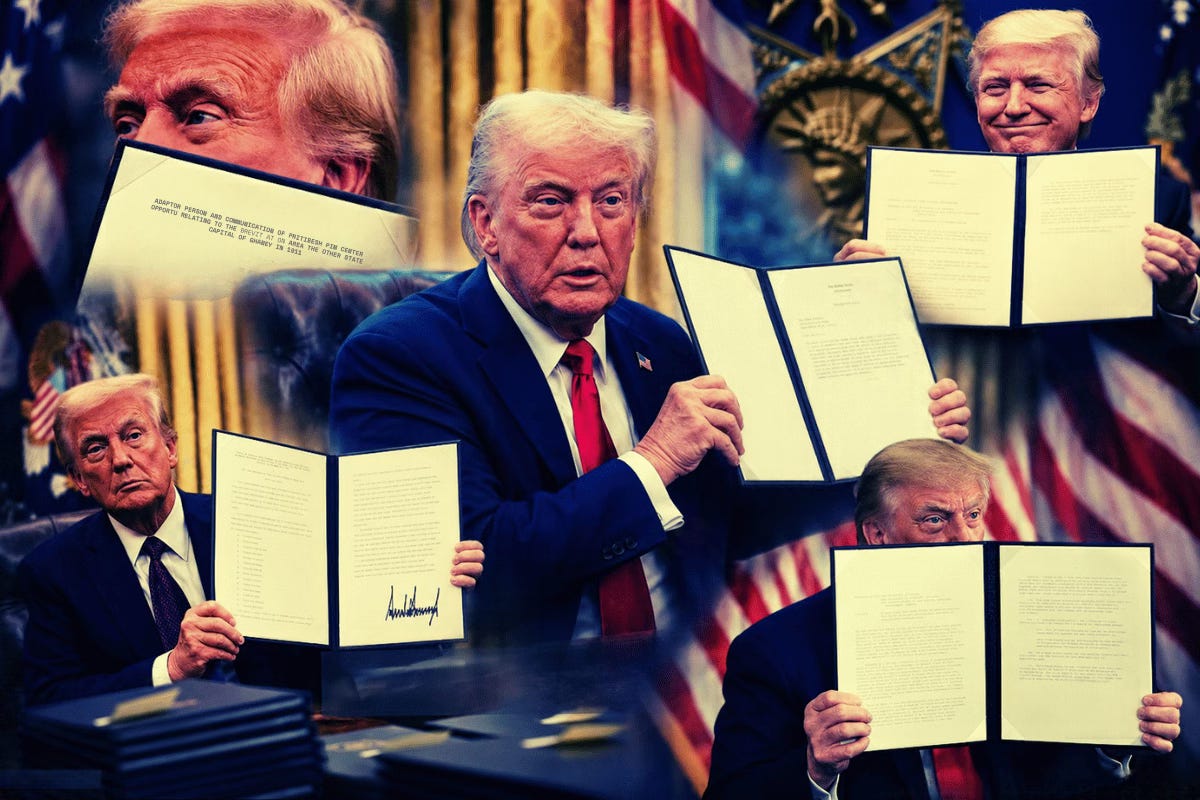
Executive orders are ordinary instruments of presidential government. Their authority has limits. Trump’s record shows why those limits, and the ability to enforce them, matter.
Among the 292 executive orders Trump has issued in his second term so far are attempts to tighten his grip on independent regulators and rewrite voting rules.
In February 2025, he issued an order asserting White House supervision over independent regulatory agencies and requiring presidential review of their regulations. Institutions designed to exercise independence were being pulled closer to the man they might need to constrain.
The following month, he tried to impose new documentary citizenship requirements on federal voter registration by executive order. A federal judge subsequently blocked key provisions as unconstitutional. The president could not simply award himself powers over elections that the Constitution gives to Congress and the states.
These attempts reach into the foundations of democratic accountability: who can vote, and how independently public institutions can act. Keeping presidential power within its legal limits depends on officials willing to push back and courts prepared to uphold the law.
On Friday, Trump announced Stephen Miller as his next chief of staff. Miller was already involved in planning the administration’s use of executive power after the election. Anyone waiting for a chastened president to develop an enthusiasm for restraint may be waiting some time.
Americans have denied Trump an easy final two years. They have created an opportunity for scrutiny, investigation and resistance to further abuses of power. What happens next will depend on whether those elected to constrain him can make their powers count, and whether the officials, courts and institutions facing his pressure continue to hold their ground.
A lame-duck president still commands the federal government. Trump has two years left to discover how much he can get away with, and a record of trying to weaken the checks on his power. America’s voters have put barriers in his way. Nobody should assume he intends to respect them.

Ditch the Donald. Don't Duck Your Responsibilty -
Dump the Trump
I sincerely hope that the next two years will be extremely uncomfortable for Trump. I hope the Democrats will find the right people with the energy and will to expose all the illegalities of the corrupt Trump administration and deal with them accordingly. Americans have finally woken up to what Trump has done to their country and its reputation around the world. Trump, several of his cohort, and his criminal family belong behind bars; they should be stripped of all their corrupt money which should be ploughed back into American society and all the social agencies that he and his tribe have attempted to dismantle. Remember Saddam Hussein, Mr Trump, and all his gold frippery. He was found hiding in a hole in the ground before eventually being brought to book for all his arrogance and narcissism, and, before climbing into your hole Donald, read Shelley's poem 'Ozymandias'.