

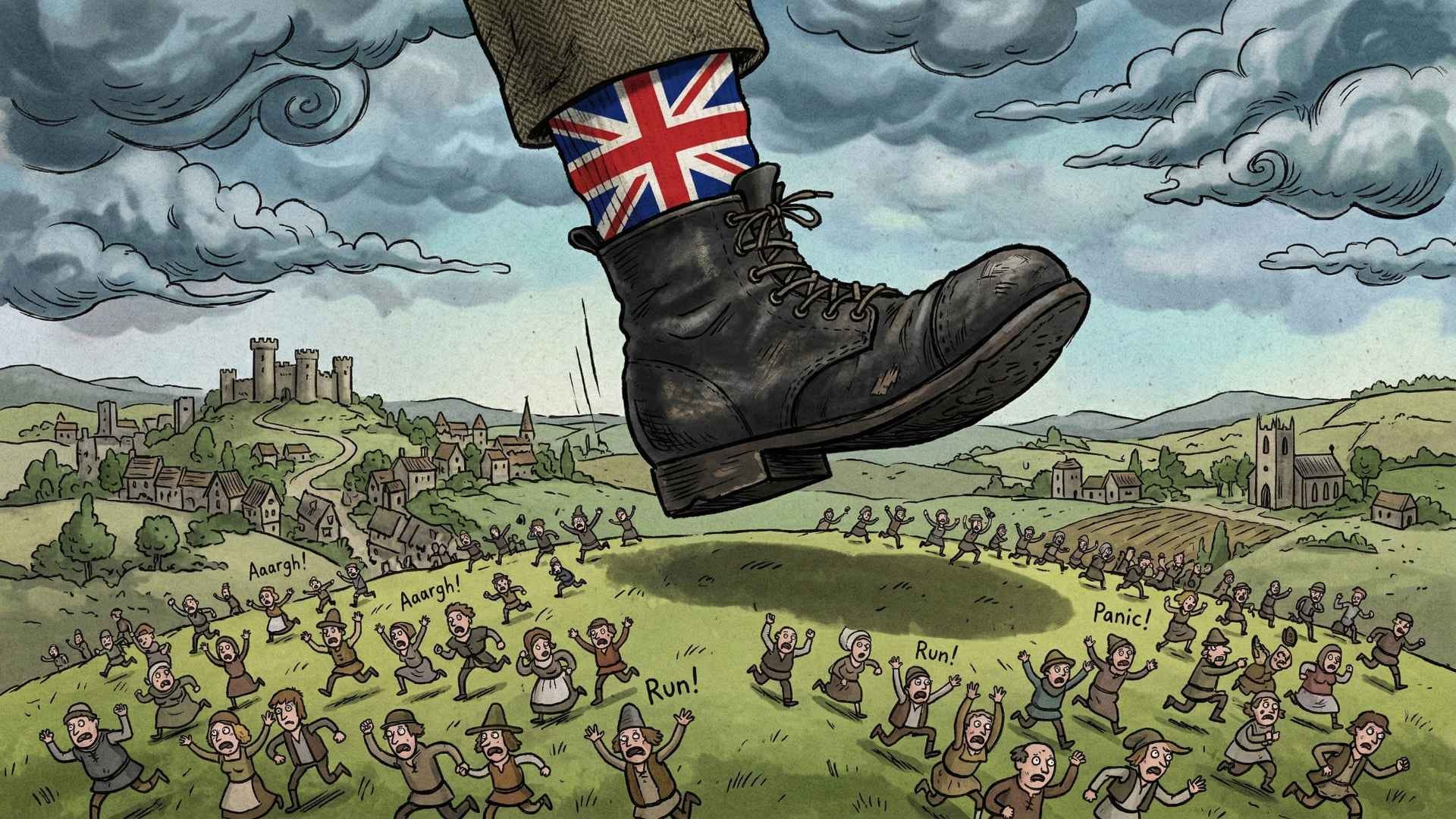
In 1902, the American social reformer Jane Addams wrote that “the cure for the ills of democracy is more democracy.” Over a century later, it remains one of the most useful diagnostic tools in politics. If more democracy is the cure, then anyone proposing less democracy owes you an extraordinarily good explanation of why. And if they can’t give you one, that probably tells you everything you need to know about their real intentions.
They Talk The Talk…
Reform UK will tell you they’re all about democracy. Their 2024 manifesto included a referendum on proportional representation (yet they are strangely silent on that now) and a plan to replace the Lords with an elected chamber. And Farage has long cast himself as the spokesman for an overlooked majority.
Some of this is genuine. Reform were brutally punished by the current voting system in 2024. Their 14.3% of the national vote translated into just five seats in the Commons. More than four million people voted for them and got almost nothing in return. That’s a democratic outrage, and I’ve said so consistently. Fair elections must be fair for everyone, even those whose policy objectives we may not share.
So yes, Reform have legitimate grievances. But do they act on these concerns when they get their hands on democratic power? Do these noble words become heroic acts when they get their hands on the levers of power?
…But They Don’t Walk The Walk
Start with the party itself. Until February 2025, Reform UK held the status of a limited company with Farage as majority shareholder. A political party structured as a private business, owned by one man. His former deputy Ben Habib called the party constitution “undemocratic” before flouncing out to start his own party.
The replacement entity, Reform 2025 Limited, has exactly two directors - Farage and treasurer Zia Yusuf - yet its Companies House filings claim “no person of significant control.” A party that talks about giving power back to the people while its corporate structure puts all power in the hands of two rich men.
Then look at what happens when Reform actually win elections. In Nottinghamshire (my neck of the woods), after taking 41 of 66 county council seats, leader Mick Barton imposed a full media blackout - banning all Reform councillors from speaking to local journalists. The Society of Editors responded: “they’re not just shutting out the press - they’re shutting out the public they serve.” Exactly the right point.
In Kent, Reform moved to slash scrutiny committees, eliminating oversight of social care, education and the environment, arguing that doing so would save the good people of Kent £75,000 a year. Is that a fair price for the reduction in democratic control they now have?
At the 2025 Reform party conference, journalists (including some of our friends at Byline Times) were barred from events.
And across the country, at least fifteen Reform councillors were suspended, expelled or quit within four months of being elected, some for the heinous crime of asking senior colleagues to justify their agendas.
Ban the journalists. Cut the scrutiny. Centralise control. This is Reform’s reform in practice.
Fewer Voters, Fewer Rights, Fewer Checks
If Reform have their way, this pattern would extend well beyond local government.
They recently announced they would restrict postal voting to the elderly, disabled and armed forces - stripping the option from everyone else. They’d remove voting rights from around a million Commonwealth citizens. And they will resist the government’s plans to use the Representation of the People Bill to give 16-year-olds the vote. All steps that would vastly reduce the size of the electorate and the democratic power that could be ranged against a future Reform government.
And, remember, this erosion of democracy doesn’t stop at the ballot box. Reform want to withdraw from the European Convention on Human Rights - the post-war framework Britain helped design to prevent democracy collapsing into unchecked majority rule. They’d repeal the Human Rights Act and abandon our commitment to the UN Refugee Convention. Every one of these policies reduces democratic accountability. Fewer voters. Fewer protections. Fewer checks on power.
When a party proposes reducing the number of people who get to participate and reducing the mechanisms that hold power to account, they’re not fixing democracy. They’re telling you they don’t want to hear your voice, that they don’t want you asking awkward questions while they’re deciding how you will be able to live your life.
The Distortion Machine That Would Hand Them Complete Control
More in Common’s most recent MRP projection estimates that, if an election were to be held now, Reform would win 381 seats - a majority of 115 - on roughly 31% of the vote. That’s 60% of parliamentary seats from less than a third of the electorate - one of the most disproportionate results in modern democratic history. And we know this is not just fanciful suggestion - those percentages are very close to the ones that brought our current government to power at the 2024 general election.
On those projections, the same First Past the Post distortion machine that crushed Reform in 2024 would turbocharge them next time. And their record - banning journalists, slashing scrutiny, shrinking the franchise - tells you exactly what they’d do with a stonking majority like that.
Two Visions for UK Democracy
There are two visions on offer right now for our future democracy.
One would have fewer of us voting, under fewer protections, with less scrutiny for those in power. Press too critical? Ban them. Committees asking awkward questions? Abolish them. Commonwealth citizens exercising a decades-old right? Strip it away. 16-year-olds - who’ll live longest with the political decisions being made right now - wanting a say? Keep them out.
The other would have more people voting, under stronger protections, with genuine accountability for those in power. Automatic voter registration. Votes at 16. A fair voting system, so Parliament reflects how people actually voted. A fair information ecosystem, so people can make properly informed democratic decisions. Fair influence structures, so the will of the people cannot be bulldozed out of the way by the wealthy and well-connected. And the whole system built on the value of fair play - so the rules apply to everyone and can be enforced by independent bodies, empowered and resourced to do the job properly.
The first uses the language of democracy to concentrate power. The second uses it to distribute power. Reform’s words would have you believe they are on the side of the former; but their actions show you that they are very much on the side of the latter.
I’m with Jane Addams: The cure for the ills of democracy is indeed more and better democracy, not less and worse. Farage needs to start explaining why he’s not with Adamms too.

Deliberate self serving lies, the actual liars, and their supporters are a serious threat to our democracy and our existence. The spread and development of AI will assist these disgusting self serving liars as it will make their lies harder to recognise. The only solution is to make deliberate self serving lying and support of lies a criminal offence in all aspects of our lives like perjury in a court. The punishments must be large to deter these greedy lying billionaires, who fund and promote the lies. In addition to imprisonment there should be huge fines on the net worth of these individuals, lets say 80% of their net worth for each lie.
It strikes me as odd that the content of this article, which was in the public domain for quite some time now, doesn’t push more people into questioning what is happening. If people accept mendacious creeps as the ones to lead the nation, with the experience of what happened with the NHS and during Brexit, Covid, Post Office and the drinking water fiasco that they caused, one might by now begin to question the common sense of a lot of the people in this country.