

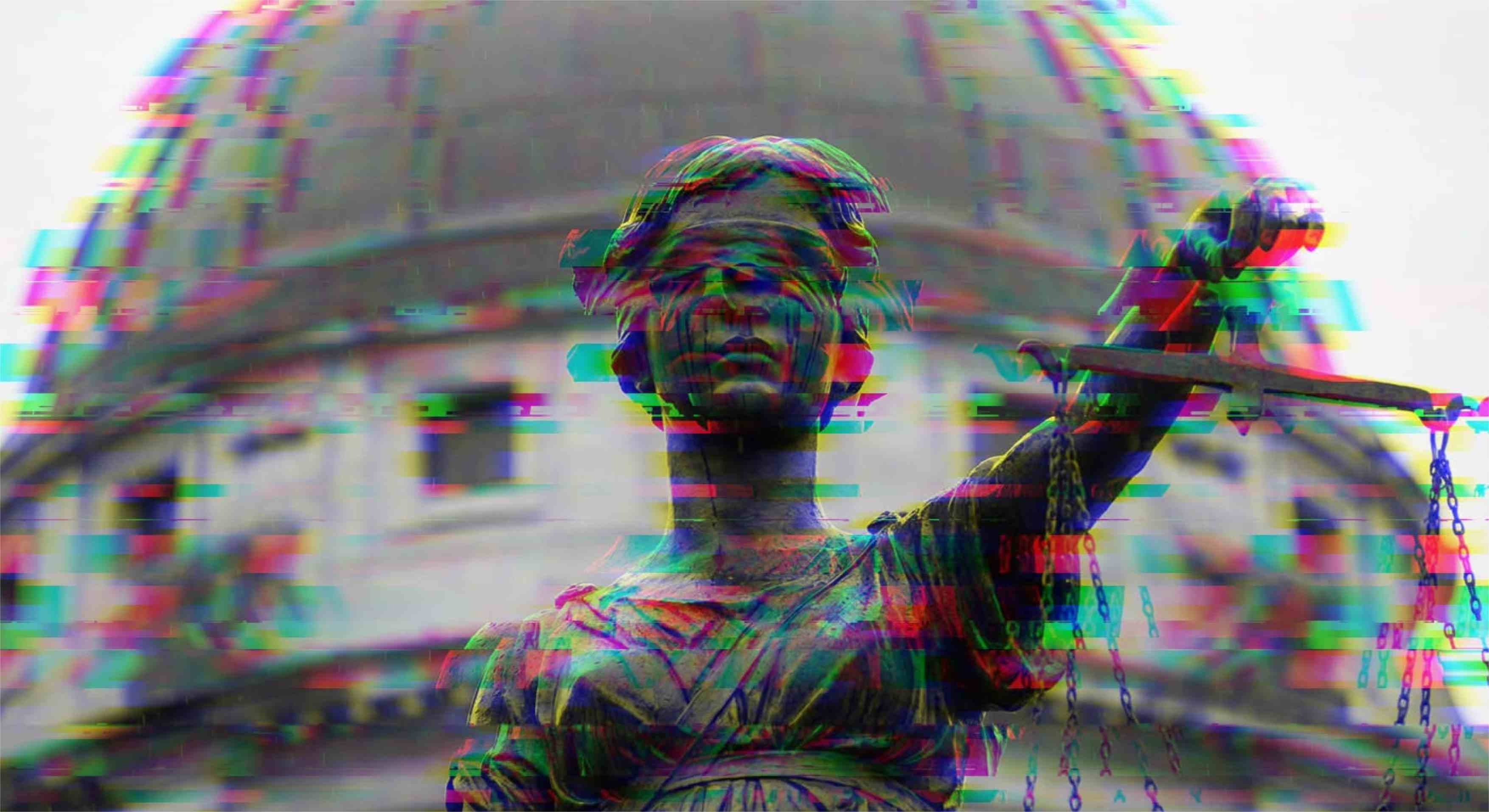
“Society grows great,” the old proverb says, “when old men plant trees whose shade they know they shall never sit in.” In political reality, the opposite is too often true. Governments hand down structures and policies with little thought for who might inherit them - or what authoritarian ends those tools might eventually serve. The seeds being planted now risk casting much darker shadows.
At the time of writing, Justice Secretary David Lammy has just announced major plans to restrict jury trials, touted as a common-sense response to a (quite real, in fairness) crisis of delays. Some 78,000 cases await completion in Crown Courts, with trials set as far off as 2030.
Lammy’s proposal, in essence, is that only offences carrying more than three years imprisonment would still go before a jury, with most other cases would be decided solely by a judge. Lammy claims restricting the right to a jury trial will also stop defendants from “gaming the system.”
Tyrone Steele, Deputy Legal Director at JUSTICE, describes restrictions on jury trials - “one of our most cherished democratic rituals and a cornerstone of public confidence in the criminal justice system” - as attacks on democracy itself. He is right to sound the alarm.
Even under current arrangements, Steele warns, such reforms could profoundly damage public trust. The far right already has a well-documented tendency to weaponise court decisions for political gain. One need only recall the Daily Mail’s infamous “Enemies of the People” front page - a broadside against three judges for upholding parliamentary sovereignty during the Brexit battles. Undermine juries further, and judges become even more politically exposed, taking us down a very slippery slope indeed.
There is also the chilling effect on the right to protest. Climate and Gaza protesters have already seen their ability to present certain arguments before juries curtailed. In late 2025, a judge refused to allow climate activists to tell a jury basic facts about climate change to contextualise their actions. Remove the jury entirely - remove the public conscience - and it becomes still harder for those targeted by ever-harsher protest laws to defend themselves.
But perhaps the gravest concern is this: authoritarian regimes often begin by centralising legal interpretation. In Russia, Putin sharply curtailed jury trials in the early 2000s, replacing independent judges with loyalists and ensuring that politically sensitive cases were routed away from juries. Trials became swifter, yes - but at the cost of the rule of law itself. We have seen similar patterns unfold in Orbán’s Hungary and Erdoğan’s Turkey.
Seen through that lens, it is not difficult to imagine how restricting jury trials could, unintentionally or otherwise, create opportunities for a future government to tilt the system much further. A party like Nigel Farage’s Reform UK - hostile to migrants, protesters, practically any and all dissenting groups - would undoubtedly find it more convenient to put offenders in front of judges alone rather than contend with juries who might acquit on grounds of conscience. The danger isn’t just what today’s ministers intend, but what tomorrow’s might inherit and exploit.
Worst of all, when it comes to Lammy’s proposal, is that legal experts say the restrictions on jury trial are unlikely to even clear the backlog. Barrister Gareth Roberts writes that it would only achieve one thing: “We, as citizens, will lose the fundamental right to say, ‘okay, you’ve accused me of a crime, now prove it before my fellow men and women.’ And that right is absolutely precious.”
Keir Monteith KC claims it is not only “unconstitutional and politically naive”, but “it will create further unfairness and miscarriages of justice for black and minority ethnic defendants.”
This is not a new phenomenon. Naively seeking bipartisanship with increasingly rabid Republicans, Barack Obama massively empowered Immigrations and Customs Enforcement (ICE). Those same ICE agents, heavily armed and masked, now operate as a de facto American gestapo.
The Obama administration gave ICE the tools - the data-sharing powers and infrastructure for detention and deportation - that later allowed Trump to weaponise the agency, along with the plausible deniability to claim: “we’re just using them as intended.”
You can see the alluring authoritarian tools on offer in the UK: Shabana Mahmood’s new asylum system, digital ID, ministerial powers over the Electoral Commission and online content. Yes, modern nation-states are packed with potentially powerful weapons - while a thermostat can keep your home comfortable, there’s plenty of people you wouldn’t want fiddling with the dial. Bad actors can and will use whatever is bequeathed to them.
There’s no reason to make their job easier. As a rule of thumb: more transparency, accountability, and public input is the way to go. The old adage implores us to plant trees for future generations. We must take care, then, that in the name of efficiency today, we are not planting a forest of gallows for tomorrow.
💥👉 Now, before you go, please take a second to:
- Help grow Ugly Politix by clicking the ‘Like’ and ‘Restack’ buttons above
- Ensure you’re first to see future articles by hitting the ‘Subscribe Now’ button below
- Have your say on Labour’s new immigration policy by leaving us a comment
Remember, NONE OF THIS COSTS YOU ANYTHING - it just confirms to Substack that our readers value our work…and gives us a warm, fuzzy feeling inside! 😊 Thank you! 🙏
We need to remember that it is a Labour Government that proposes this and in doing so they are acting in Bad faith to all those who are members and voters in the last, and past, elections.
I did not vote at the last election as I feared the way Kier would go on attaining power, so my anxieties were proved correct, weren't they?
It is so important that 'ordinary' people are aware of and involved with the legal system. Juries help that. To remove them will make law courts more a 'club' for those 'in the know'. The justice system must remain accountable to the wider society.