

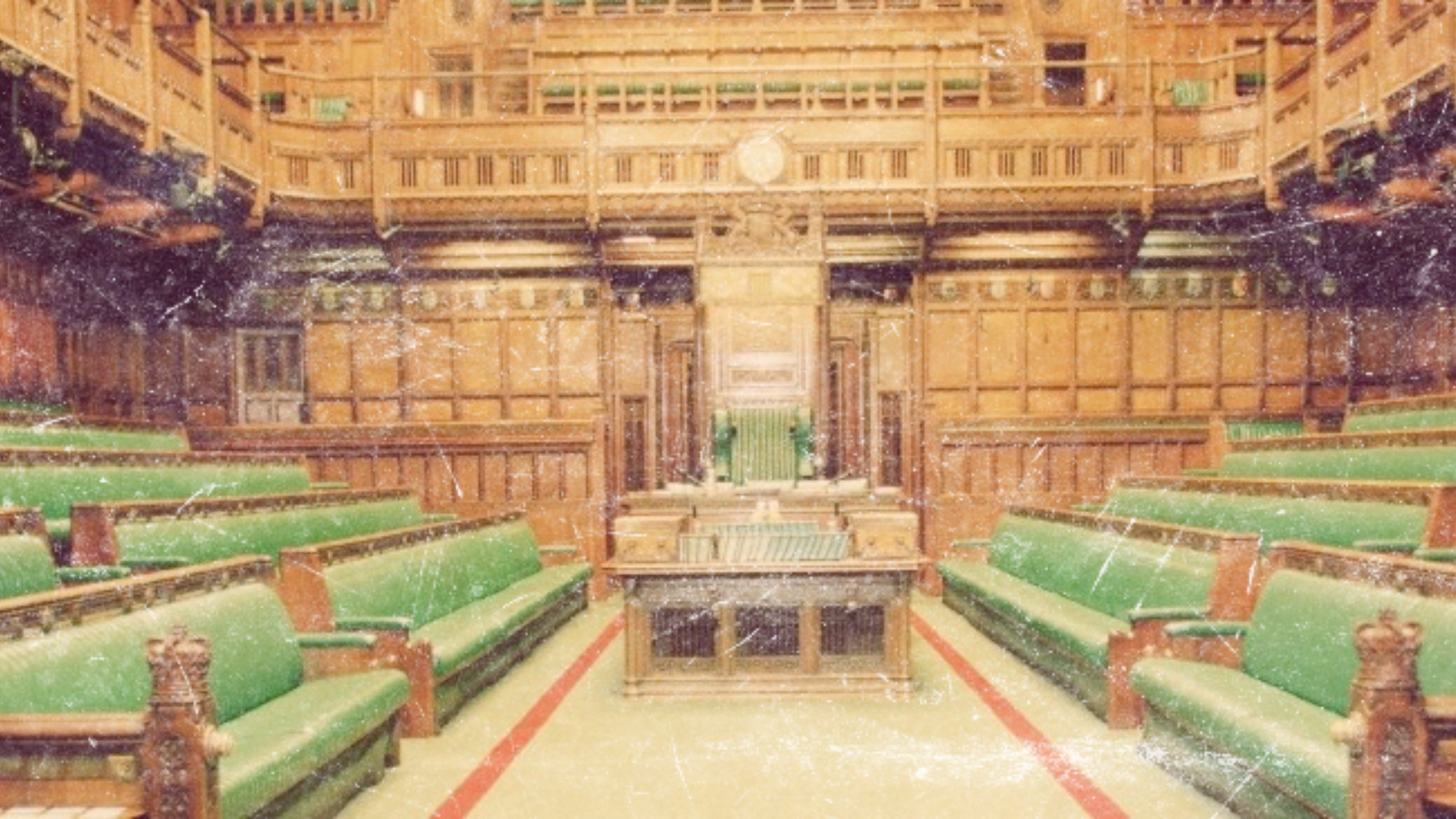
You’ve probably seen this week’s news splashes, read the sweaty palmed op-eds or seen the former cabinet ministers doing the talk show rounds. They’re all saying the same thing: “Britain is becoming ungovernable”.
Now on the surface, it can seem like they have a good reason to say something like that.
Since 2016, Britain has had six Prime Ministers, eight chancellors and nine foreign secretaries – with a new premiership already looking increasingly likely. In just ten years, the country has churned through almost as many leaders as it did in the nearly four decades between Thatcher entering Downing Street and the Brexit referendum.
Turbulent indeed. But where the commentariat and many of the politicians diagnose the electorate with a terminal case of rowdiness, there’s a far, far simpler truth here – one those same people are incredibly reluctant to admit.
The people and the institutions that make up Britain’s political apparatus have completely lost the public’s trust. And you really don’t need a doctorate in political science to understand why.
We’ve got a first-past-the-post voting system that throws people’s votes out the window and puts only a select few constituencies in the spotlight. The rest be damned.
A lobbying industrial complex whose business model involves crowding out the aspirations of ordinary people to make way for the whims of billionaires.
A routine political habit of making promises to the public that aren’t kept – or worse, of neglecting to address people’s needs at all.
And perhaps worst of all: we have a calcified and out-of-touch political class that benefits from all of this and can’t ever possibly understand what the public is so upset about.
It sure has its problems, but Britain is a country with a robust civic and democratic tradition. It’s immensely governable. People still join associations, volunteer, petition, leaflet, fundraise, sit through planning meetings, serve as councillors, form campaign groups, write angry letters, and queue patiently outside polling stations in the drizzling rain. So many of us still believe in the power of democracy.
The message that Britain has sent premiership after crumbling premiership is not that we want out of democracy – it’s that we want in. People want a part to play in the crucial decisions about the future of their communities and their country. They’re tired of being dishonestly performed at during the campaign and then managed from above after polling day.
And instead of confronting that genuine democratic failure honestly, much of the Westminster establishment has chosen an easier explanation: blame the public. Blame voters for being too angry, too volatile, too irrational to govern.
What has collapsed is not the public’s appetite for participation, but their confidence that the existing political system is capable of translating that participation into meaningful power.
Westminster increasingly resembles a sealed machine which absorbs public pressure without ever fundamentally responding to it. Governments rotate in and out while the underlying settlement remains oddly untouched: over-centralised, opaque, short-termist and insulated from meaningful accountability. It’s no wonder people tire of them so quickly.
People notice when their devolved nations and regions – who have long been promised a fair shake – are still treated like administrative inconveniences.
They notice when Parliament can find limitless energy for internal psychodrama but suddenly becomes paralysed when confronted with housing shortages, crumbling public services or collapsing local economies.
They notice when politicians speak endlessly about “hard-working families” while constructing and defending a political economy in which asset wealth matters far more than work itself.
So when Westminster insiders lament that Britain has become impossible to govern, they’re really complaining about how hard it is to win over public consent without fixing Britain’s democracy or addressing the issues people care about. They’re blaming the patient for the disease.
The lesson, then, for our self-satisfied political-media class is simple: listen to people and change those systems. Cure this affliction. You cannot indefinitely run a twenty-first century society through institutions that increasingly resemble closed off old boys’ clubs. At some point, the country naturally starts pushing back.
And no, the cure for distrust is not better or more efficient management of the same insulated institutions that produced the distrust in the first place. People want a break from the old regime.
Pretending this crisis can be managed without meaningful democratic reform will simply continue producing more Nigel Farages and Rupert Lowes – entrepreneurs of political distrust feeding off institutions too arrogant to notice their own decay.
The cure is the same as it always was: distribute power more widely, scrap FPTP and make representation fairer, strengthen local democracy, reduce the stranglehold of money and patronage on political life, and rebuild institutions that people can genuinely see themselves reflected in.
It’s certainly not an easy task. But it is achievable.
And if we don’t want to discover what a truly ungovernable country looks like, it’s our only path forward.

Im not Palestinian I’ve never been to Palestine but this governments failed and pusillanimous wittering about the terrible tragedy there costs it every ounce of respect I could ever have had for any of its members, and then some.
And the rot started with the head - Starmer.
He disgusts me. His cabinet disgusts me. And the idea of a foreign secretary mewing futilely in token at an Israeli representative about what has been done to those flotilla protesters?
What is she going to say? The Israeli embassy will simply say ‘well here you would in all likelihood have convicted them as terrorists anyway, wouldnt you?’
Starmer sickens and disgusts me. He needs throwing out and his cabinet of bought out hand sitters too. Today.
Spot on.