

As a former Civil Servant who spent time working for the Chief Whip in the House of Lords, I can confess a guilty secret: I am fascinated by democratic procedural tools. Most people’s eyes glaze over at mentions of discharge petitions or standing orders, but these arcane instruments are often where real power lies - and where even the most powerful leaders discover the limits of their authority.
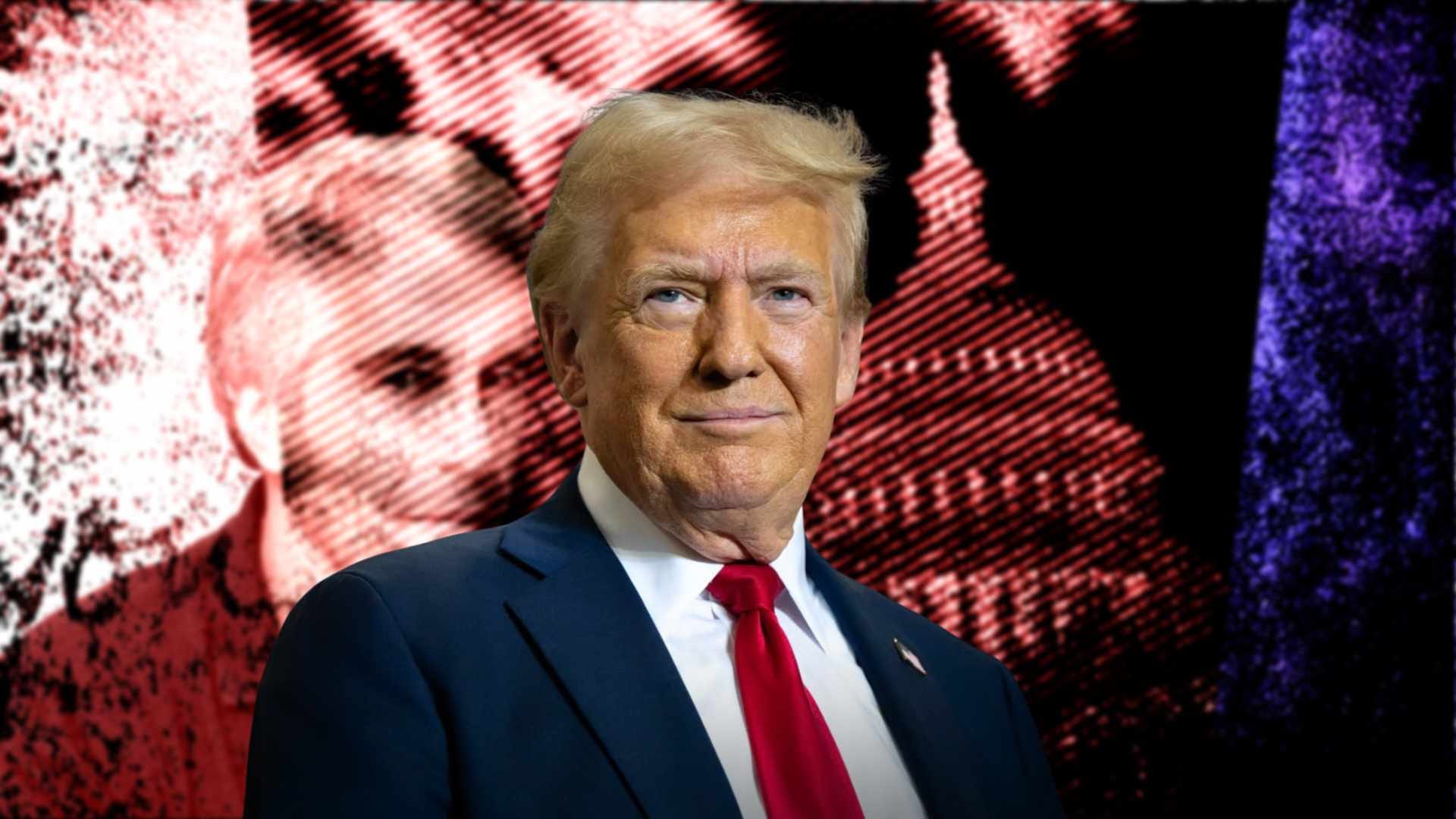
Donald Trump’s sudden reversal on releasing the Epstein files on Sunday night offers a masterclass in procedural democracy at work. After weeks of dismissing calls for transparency as a “Democrat Hoax” and publicly feuding with members of his own party, Trump abruptly announced that Republicans should vote to release the files - a complete about-face that came only when the mathematical reality became unavoidable.
What forced his hand wasn’t moral pressure or media outcry. It was a discharge petition - a procedural mechanism allowing House members to bypass leadership and force a vote. When newly sworn-in Representative Adelita Grijalva became the 218th signature last Wednesday, the die was cast. Trump could huff and puff all he wanted, but the procedural machinery would grind forward regardless.
The drama unfolding within the MAGA movement makes the spectacle even more remarkable. Trump personally called Representative Lauren Boebert on Tuesday attempting to get her to remove her name from the petition. The following day, White House officials including FBI Director Kash Patel met with Boebert at the White House in what was described as an attempt to convince her before the petition became locked at 218 signatures . She refused to budge.
The President’s most dramatic rupture came with Representative Marjorie Taylor Greene, one of his most loyal supporters and not someone I usually have much time for. Trump withdrew his endorsement and called her a “ranting Lunatic,” while Greene shot back that he was making an example of her to intimidate other Republicans before the vote. Greene told CBS she believes Trump’s opposition to releasing the files is “a huge miscalculation,” noting that even some of Epstein’s victims have said Trump did nothing wrong . She reported receiving death threats following Trump’s attacks and said she’s been contacted by private security firms warning about “a hot bed of threats” being “fuelled and egged on by the most powerful man in the world”.
Perhaps most revealing is Representative Thomas Massie’s blunt assessment of why Trump fought so hard. On ABC’s “This Week,” Massie said he doesn’t believe the files will implicate Trump but thinks “he’s trying to protect a bunch of rich and powerful friends, billionaires, donors to his campaign, friends in his social circles”. Massie went further on Cincinnati radio, claiming Trump himself had said privately that releasing the files would “hurt his friends in West Palm Beach” .
The tactical sophistication of this procedural rebellion deserves attention - at least by wonks like me. By early Sunday, Massie was predicting that 100 or more Republicans could vote for the measure - a potential veto-proof majority . Speaker Mike Johnson had tried everything to forestall this moment, sending the House on early recess in July and keeping them out for an extraordinarily long time during the shutdown, arguably to avoid having to swear in that decisive 218th member. None of it worked. Once the procedural threshold was reached, the vote became inevitable.
Trump’s capitulation Sunday night was therefore a recognition of reality, not a genuine change of heart. A senior White House official confirmed that Trump was made aware Johnson would expedite the vote and that “it was made clear to President Trump, and he understands that this is an inevitable reality”. Rather than suffer a humiliating defeat, he attempted to reframe his loss as a decision, urging Republicans to “get this done and move it on” while still calling it a Democrat hoax.
The contrasts with our own system are instructive. The discharge petition worked because it had teeth: a clear numerical threshold, an automatic mechanism, and no executive veto. Once 218 signatures were secured, not even the President could stop it. Our parliamentary tools too often depend on government cooperation or Speaker discretion, giving those in power room to manoeuvre away from accountability.
Consider what might happen if we had similar mechanisms here. Imagine if 326 MPs - a simple majority - could force a vote on the release of government documents, regardless of ministerial objections. Imagine if backbenchers could compel transparency on matters of public interest without requiring the executive’s permission. The Epstein files saga demonstrates what robust procedural democracy looks like in action: uncomfortable, messy, but ultimately effective.
The MAGA movement’s split on this issue is particularly telling. Remember, these aren’t liberal opponents of Trump but his most fervent supporters - Greene, Boebert, Mace, Massie - who, in this instance, decided to defy him on principle. Massie reminded his Republican colleagues that “Donald Trump can protect you in red districts right now by giving you an endorsement, but in 2030 he’s not going to be the president, and you will have voted to protect pedophiles” . That’s a politician calculating that the procedural record outlasts any individual’s power - exactly the kind of long-term thinking that strong democratic mechanisms encourage.
The American system is working precisely as designed. Trump couldn’t simply declare the matter closed because the Constitution doesn’t permit it. Attorney General Pam Bondi’s announcement of an investigation into Democrats’ Epstein connections raised concerns that Trump was creating a pretext to delay release, but Massie called it “a big smokescreen” - “a last ditch effort to prevent the release of the Epstein files” . Yet even that manoeuvre cannot ultimately prevent the House vote.
Trump’s Epstein files reversal teaches us that even the most powerful CAN be constrained - but only if the procedural architecture doesn’t allow them an escape route. These tools, rarely even known about by the public, can be some of the most potent ways to hold power to account. They show how a properly functioning democracy can empower the little people: us! Not through dramatic confrontation or electoral triumph, but through the unglamorous, essential work of making sure that those who govern cannot simply refuse to answer when we, the people, ask questions.
💥👉 Now, before you go, please take a second to:
- Help grow Ugly Politix by clicking the ‘Like’ and ‘Restack’ buttons above
- Ensure you’re first to see future articles by hitting the ‘Subscribe Now’ button below
- Have your say on Trump and the Epstein files by leaving us a comment
Remember, NONE OF THIS COSTS YOU ANYTHING - it just confirms to Substack that our readers value our work…and gives us a warm, fuzzy feeling inside! 😁 Thank you! 🙏
I wish that we could have had ways to hold Johnson, Hancock, Truss and Sunak to account for their incompetence and maybe ill gotten gains?
This is why written constitutions and procedural rules matter. Johnson was able to prorogue because the UK lacks a writted constitution