

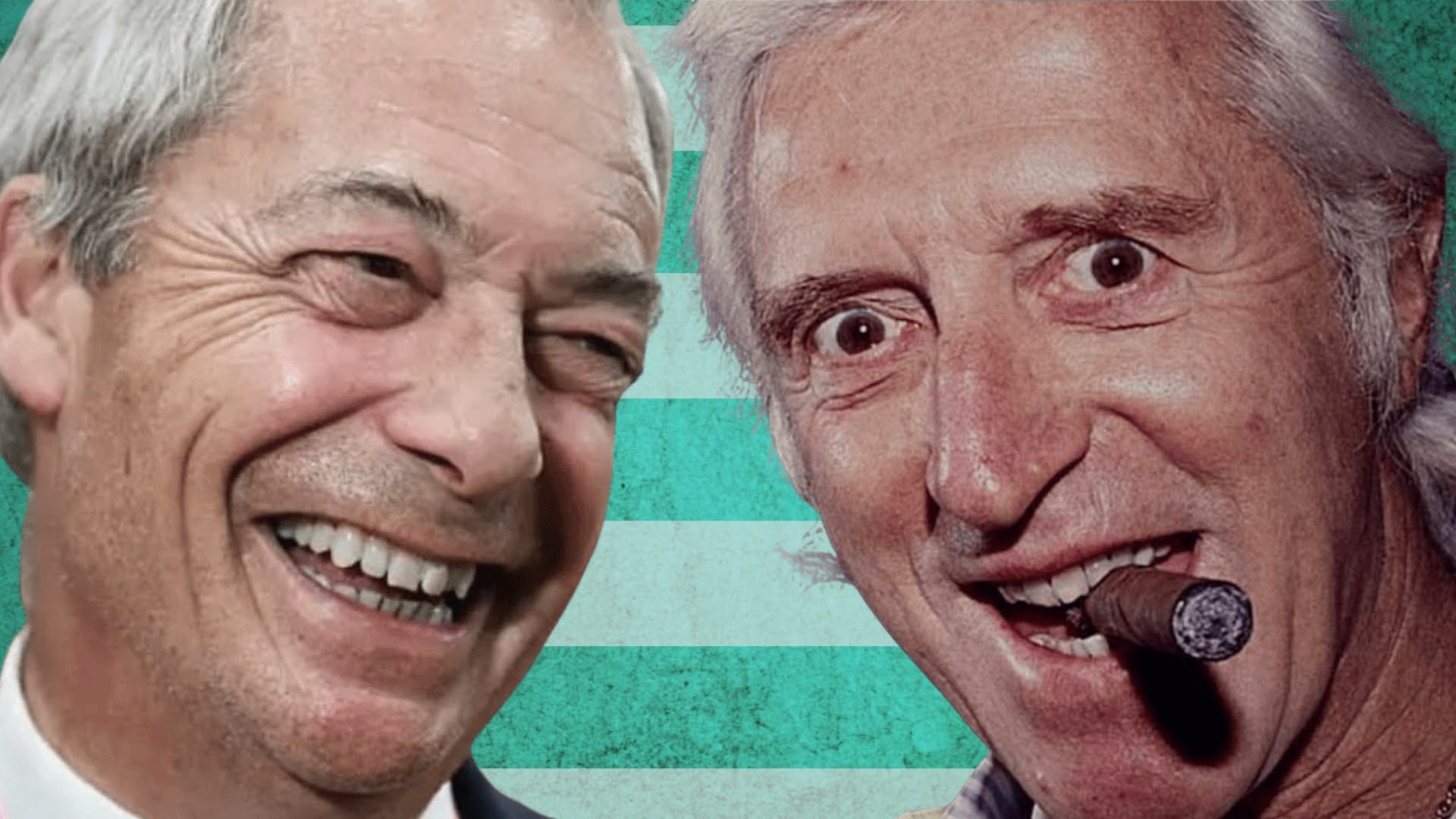
Nigel Farage's knee-jerk promise to repeal the Online Safety Act offers a perfect case study in why populist theatrics make for dangerous governance. Within days of the legislation's child protection measures taking effect, Reform UK positioned itself as the champion of "digital freedom" - without bothering to understand what they were actually opposing or who would benefit from its removal.
Farage calls this policy-making; I call it political pantomime. And it reveals precisely why Farage remains fundamentally unfit for high office.
The timeline tells the story. On July 25th, 2025, the Online Safety Act's core provisions came into force, requiring digital platforms to verify users' ages before exposing them to adult content or other potentially harmful messages. By July 29th - barely four days later - Farage had announced that repealing the Act is a top priority for any future government he might lead.
Four days. Not enough time to assess impact, gather evidence, or consult experts. But apparently sufficient for Farage to decide that dismantling child protection measures would be "one of the first things a Reform government does."
This rush to oppose reveals the hollow core of populist politics: the substitution of instinct for analysis, slogans for solutions. When Technology Secretary Peter Kyle accused Farage of siding with "people like Jimmy Savile," the language WAS inflammatory. But it exposed an uncomfortable truth about who actually benefits when safeguards disappear without replacement and why Farage was unwise to jump on that particular bandwagon.
When faced with complex policy questions, serious politicians ask who wins and who loses from potential policy changes. (I used to teach fast-stream civil servants policy development…this is an aspect of government I know particularly well.) Farage's approach suggests he either hasn't considered this question or doesn't care about the answer.
The immediate winners from Online Safety Act repeal are obvious: adult content platforms facing expensive compliance requirements, data brokers losing access to children's personal information, and tech giants whose business models depend on harvesting data from users too young to understand the implications.
The losers are equally clear: children who encounter pornography at an average age of 13, families dealing with the fallout from exposure to content promoting suicide and eating disorders, and parents who reasonably expect some basic protection in the digital spaces their children inhabit.
Yet when pressed for alternatives to the current arrangements, Farage’s spokesman, Zia Yusuf, could only admit Reform lack "a perfect answer”. This intellectual void - opposing everything while proposing nothing - is populism's defining characteristic.
The Online Safety Act controversy isn't an isolated incident but part of a broader pattern that should alarm anyone considering Farage for high office. Time and again, his political instincts drive him toward the simplest possible position: tear it down, blame Brussels or Westminster, promise something better will emerge from the wreckage.
This approach works brilliantly for opposition politics. It's catnip for voters frustrated with complexity and compromise. But governance requires the very qualities populism abhors: nuance, trade-offs, and the patient work of making imperfect systems incrementally better rather than dramatically worse.
The 386,000 signatures on petitions opposing the Online Safety Act reflect genuine concerns about government overreach and digital rights. These anxieties deserve serious political attention. But Farage's response - wholesale repeal without credible alternatives - treats legitimate worry as an opportunity for grandstanding rather than something requiring careful consideration and thoughtful solutions.
Real leadership means grappling with difficult questions: How do you balance free speech with child protection? How do you preserve privacy while preventing harm? How do you regulate global platforms without stifling innovation? These challenges have no easy answers, which is precisely why they require leaders capable of managing complexity rather than those who profit from its absence.
Farage's record suggests he's temperamentally unsuited to such work. His entire political career has been built on identifying problems, amplifying grievances, and promising that simple solutions exist if only the “new elite” establishment would get out of the way. It's a powerful formula for winning votes but a disastrous approach to wielding power.
This latest move just confirms his unfitness. When presented with legislation that addresses well-documented harms to children (albeit imperfectly) Farage's instinct was to oppose first and think second (or maybe never). When challenged on alternatives, he fell back on admissions of ignorance dressed up as principled opposition.
This isn't the mark of a leader but of a permanent protester, someone more comfortable throwing stones than laying foundations. British politics has room for such figures, but not in positions requiring the careful exercise of executive authority.
Democracy allows for the possibility that populist energy can mature into responsible governance. Sometimes anti-establishment figures DO evolve, learning to channel grievances into constructive reform. But Farage's approach to the Online Safety Act suggests no such evolution has taken place in his case. He’s still in his comfort zone of identifying establishment consensus, positioning against it, and promising that destruction will somehow lead to improvement. It's a formula that has brought him political success but would prove catastrophic in government, where the consequences of policy mistakes fall on real families rather than political opponents.
Legitimate concerns about digital rights and government overreach deserve better champions than those who would sacrifice child protection for a bit of quick publicity. Britain needs leaders capable of threading the needle between necessary regulation and dangerous overreach - not those who see every complex problem as an opportunity for simple slogans and self-aggrandising.
The last few days have revealed a politician still operating in permanent campaign mode, unable or unwilling to make the transition from criticism to construction that high office demands. Until that changes - and nothing in his recent performance suggests it ever will - he remains what he has always been: a gifted communicator of public frustration but a fundamentally unserious candidate for the serious business of government.
TBF experts told the government, as they told previous governments , that this act was a bad idea, which would not achieve the stated objectives. That Farage is jumping on it is indeed populist, but that doesn't make him wrong. Just this once.
Although I loathe Farage, I think he has the tiniest, homeopathic point here. I was opposing this legislation in early 2019. As a programmer who has been working as such for nearly 30 years (and was learning my trade over a decade before that) I have a pretty good understanding of how flawed this implementation was going to be.
And so it is. We've already seen VPN registrations through the roof. A non-UK site famous as "The cesspit of the internet" hasn't bothered to implement any controls, because they don't operate financially in the UK, and a popular browser has its own built-in VPN. Then there's the TOR browser, newsgroups, and a myriad of other toutes you can get hold of the content the UK .gov wishes to preclude access to.
So while I'm alarmed about the potential for online censorship, I also remain happy that there will be a way around it. I am equally aware that anyone with a handful of braincells to rub together will work this out. Similarly guides to work around this will be shared, samizdat style, amongst those who are unable to.
Like Farage, I don't have a comprehensive answer. It would have ben easier in the days of shared computing and locked accounts, but the current legislation does not take into account the massive changes to internet access over the last 30 years or so.
Final point and then I'll shut up. While Peter Kyle's comment was unbelievably crass, perhaps Farage owes his own apology to the people of the UK for the economic and social damage of his recent pet project, Brexit, before asking for any apology for anything. Motes and beams, and all that.