

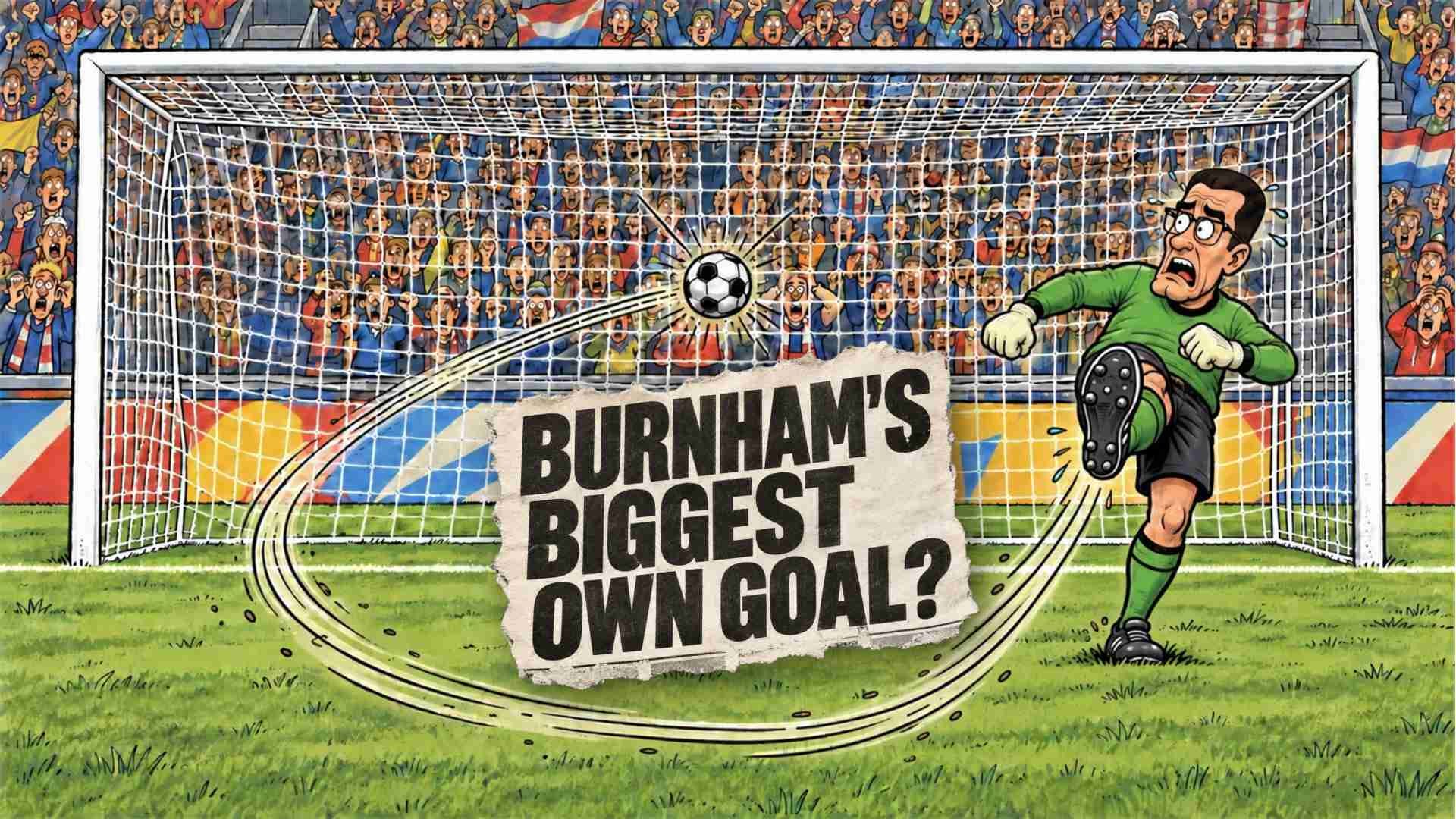
Fifty days after entering Downing Street, Andy Burnham is in danger of letting a reform he has spent years advocating slip through his fingers. He wants a fairer voting system and he wants one backed by a public mandate. Yet he still hasn’t launched the ready-made plan that could give him both.
My own organisation and others have asked him to kick off a National Commission on Electoral Reform in his first 100 days in office: an independent examination of how we elect MPs, with the public at the heart of the process, shaping its recommendations. By delaying that decision, he risks making it impossible to achieve the very change he has spent years saying he wants.
Last week, the Liberal Democrat MP Lisa Smart put two options to him in the Commons. Would he change the voting system before the next election? And if not, would he at least kick off a national commission?
Burnham replied that “there needs to be a mandate to make that change”. He answered the first question. He left the second hanging.
No serious person is suggesting something as fundamental as changing the voting system should be done without a public mandate. But a National Commission on Electoral Reform would not change the voting system. It would do four things: define what a good voting system should do, assess the current system’s performance against that definition, evaluate the alternatives already in use for elections away from Westminster, and recommend the one it judges best meets the needs of modern Britain. It would leave our elected representatives in Parliament to decide whether to change the law. There is no reason to wait for the next election to begin that work.
Indeed, if Burnham is serious about making our voting system fairer, he should be chomping at the bit to get the commission underway.
A meaningful mandate needs a clear proposal, better if it is one that the public has had a hand in shaping. Britain has recent experience of what happens when either part is missing.
In 2011, voters were offered the Alternative Vote, a system selected through coalition negotiations. They could accept or reject the proposal, but had had no role in developing it. More than two-thirds rejected it. Ever since, that defeat has dogged efforts to ensure that every vote cast actually counts for something. Putting a proposal to the people when they have had no role in shaping it is a risky business.
Five years later, the Brexit referendum exposed the opposite problem. It produced a decision to leave the European Union without settling the shape of the relationship that would replace membership. That left incompatible visions of Brexit competing to claim the same mandate. The resulting struggle consumed years of political bandwidth, distracting attention from core social issues and dividing the country to boot.
Open Britain grew out of Britain Stronger in Europe, the official Remain campaign. We know how bitter that experience became. Regardless of which side you were on in that particular referendum, the central lesson should be clear: agreement to end an arrangement does not automatically mean agreement on what should follow.
Burnham needs to avoid both traps: presenting voters with a finished answer they have had no part in developing, or asking them to endorse a change whose substance remains unresolved. Seeking a mandate for “Proportional representation” in his next manifesto will leave too much unanswered. People deserve to understand what change might mean, how they would choose their representatives and what the compromises would be.
The commission is designed to do that work. Its published blueprint brings independent commissioners and experts together with a representative forum of around 100 voters, chosen to be representative of the country at large. Crucially, its remit also includes prompting a national debate. Public hearings, regional discussions and accessible explanations would let people across the country examine the choices and contribute their views while the work was under way. People could challenge the thinking before the final recommendation was made.
That gives the commission a purpose beyond producing a report: helping the country understand the choice it will be asked to make. The commission cannot guarantee to find consensus, and must be open to conclusions campaigners on all sides dislike. But it can build the public awareness and understanding a meaningful mandate needs.
Rigorous work like this takes time. The proposed timetable allows three months to establish the commission and twelve months for it to report. Announced this autumn, it could report in early 2028, leaving time for public debate and manifesto decisions before an election in 2029.
Every month of delay reduces the time available and risks diluting the promise of meaningful change into a promise of yet more dither and delay.
There is an opening which Burnham should seize. Last week, Ministers offered cross-party talks on electoral reform, after an amendment to the Representation of the People Bill that might have brought the commission closer was ruled out of scope. The Prime Minister should use those talks to nail down arrangements for announcing the commission as soon as possible.
We know Burnham wholeheartedly believes in this reform. He has spent years calling for it. Failure now to kick off the work required to deliver it - when he is in the very best position to do so - would be an extraordinary own goal.

I will be beyond disappointed if Burnham turns out to be just 'more of the same'. Now is an opportunity to explore a more just and fairer system. FPTP is so outdated and irrelevant to Britain in the 21st Century. The people are with you at the moment Mr Burnham; don't let them down!
It has long perplexed me that the referendum to leave the EU was decided by such a tiny majority. I would have thought that a two-thirds majority would have been fairer. Instead not only has the country been wracked with divisive policies and multiple leaders, but it has seen the rise once more of bigotry, fascism and racism. The UK is immeasurably poorer as a result, and not only fiscally but also morally.