

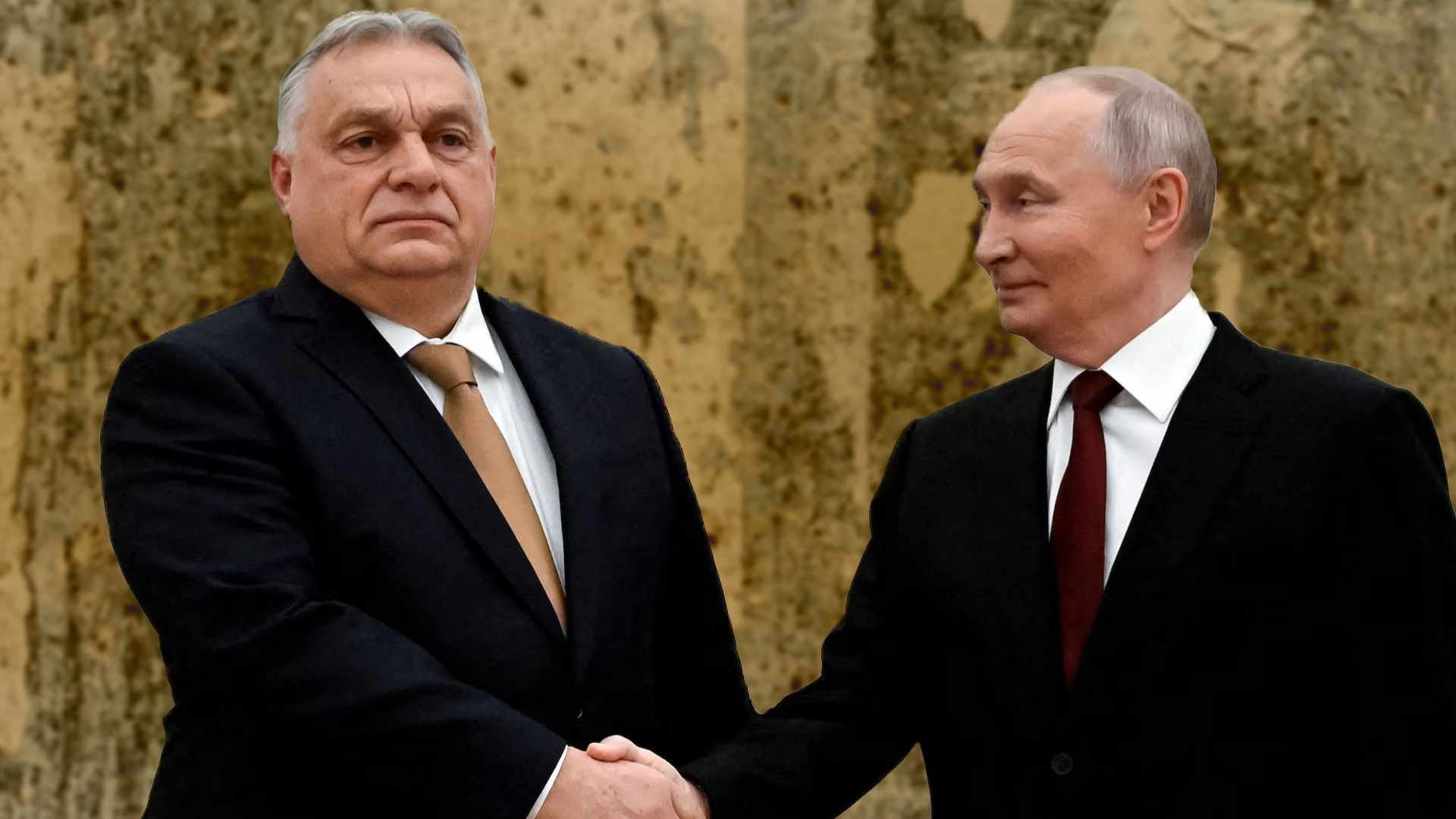
Viktor Orbán conceded defeat this evening (Sunday), after sixteen years, after four consecutive supermajorities, after rewriting the constitution and redrawing the maps and packing the courts and calling all of it democracy. Péter Magyar - who broke with Fidesz in 2024 and built an opposition in under two years from inside Orbán’s own political network - is on course for 137 seats to Orbán’s 55, with around two-thirds of ballots counted. In one of Orbán’s final messages to his supporters, he said: “We will not surrender. Never, never, never.” Then he did.
Remember, JD Vance was in Budapest last week. He stood in front of a crowd of Fidesz supporters and called Orbán wise and smart and a model for Europe. Trump phoned into the rally and told the crowd Orbán was a fantastic man. But that message seems not to have had the desired effect on Hungary’s voters. 77% of them voted - a record since the end of communism, 876,000 more voters than in 2022. Analysts suggest the Trump/Vance intervention may have actively accelerated Magyar’s win rather than helping Orbán. But the endorsement was unambiguous, and it’s on the record. We should assume this is the new normal. Trump’s administration will go out of their way to help political allies - blatantly, forcefully and without any regard to diplomatic convention.
Winning politicians often include the line “The real work starts now” in their first major address to the people. For Magyar, this will be particularly true. He is on course to win a two-thirds supermajority - or close to it, pending final results. He needs it. Not to govern, but to begin the work of rebuilding Hungary’s hollowed-out democratic institutions.
A simple majority would not be enough to reverse what Orbán built. Fidesz won four consecutive elections, several of them on minority vote shares, because the rules were set by Fidesz. Districts were drawn to maximise Fidesz seats. State broadcasters were converted into campaign infrastructure. Advertising revenue was redirected toward loyalist media and weaponised as a tax instrument against the rest. Courts were packed. A new constitution was written. Ostensibly, every formal feature of democracy remained throughout - elections, courts, a nominally free press - but each was methodically drained of any real function.
Magyar spent the campaign telling Hungarians the country faced choices. East or West. Propaganda or honest public debate. Corruption or clean public life. He was right about the choices. He knows exactly which levers were pulled, because he spent years inside the machine that pulled them. That knowledge will matter when the legal and institutional unwinding begins, and he will need to hold on to it, for this work will take a long time. Sixteen years of deliberate capture cannot be reversed in an afternoon, even with a supermajority and the best intentions.
Some things will move quicker than others. The EU will move now on frozen funds and the €90 billion Ukraine loan that Orbán kept blocking. The Kremlin loses its most useful veto player inside the bloc. These are significant consequences. But it is in those slower-tempo tasks that our most instructive lesson lies.
The democratic situation in Britain is not as bad as the one in Hungary. Our institutions have not been captured. Our courts have not been packed. Our electoral maps have not been redrawn by a governing party to entrench its own power.
But the structural vulnerabilities are not hypothetical. FPTP gave Labour 63% of the seats on 34% of the vote last year. That same arithmetic could deliver unassailable power to any party achieving similar vote concentration in 2029, including Reform UK. Campaign finance enforcement is weak enough that money moves through our politics without serious scrutiny. The institutions that would need to resist a consolidation attempt are already under sustained rhetorical attack from the political movement that would benefit most from undermining them. And Farage has said more than once that Hungary provides a useful model for the future he sees for Britain.
Magyar is inheriting a captured judiciary, politicised regulators, gerrymandered districts and entrenched patronage networks. Rebuilding what Orbán dismantled will take years, possibly a decade, even with a supermajority. We should not lose sight of that in the midst of the euphoria that will accompany Orbán’s defeat.
The old adage about prevention being better than cure applies here. It would have been easier for Hungary to defend, strengthen and renew its democracy in 2010 than it is today. The big question is whether the British people will take the lesson from Hungary or wait and have to learn it the hard way.

The closing question is spot on, and the Hungary example makes the cost of getting it wrong brutally concrete. Magyar needs a two-thirds supermajority just to begin undoing what a single party built over sixteen years using the tools the system handed it. That alone should terrify anyone watching British politics.
But I think the lesson goes further than prevention. The structural vulnerabilities you identify — FPTP delivering 63% of seats on 34% of the vote, weak campaign finance enforcement, institutions already under rhetorical attack — aren't bugs in the British system. They are the system. They exist because an uncodified constitution held together by convention offers no hard barrier against a determined actor who decides to stop playing fair.
Orbán didn't break Hungarian democracy from outside. He used its own machinery. The question for Britain is not whether someone could do the same here, but what specifically would stop them. Right now the honest answer is: convention, tradition, and the hope that nobody tries. That is not a constitution. It is a prayer.
You faith in Magyar is touching. But Orban was the darling if the West once. Oxford educated. Familiar with the institutions and theory of European politics. Pro-EU. Funded by George Soros, whom he would later use as antisemitic bait to gain electoral advantage.
As you write rightly point out, Magyar was key to all that until very recently. I hope he's genuine in his repentance, but actions speak louder than words. To describe him as "opposition" is generous. He is Hungary's Conservative party to Orban's Reform.
Although many progressives in Hungary will have held their noses and voted for him in the hope of getting Orban out, the bulk of the shift has come from Fidesz's traditional supporters - rural, conservative, religious - who've simply had enough of Orban's failing economy. They ignored the corruption in a corrupt country until prices started to rise almost weekly.
That block don't want liberalism. They just want cheap gas and EU money. Magyar knows that too.