

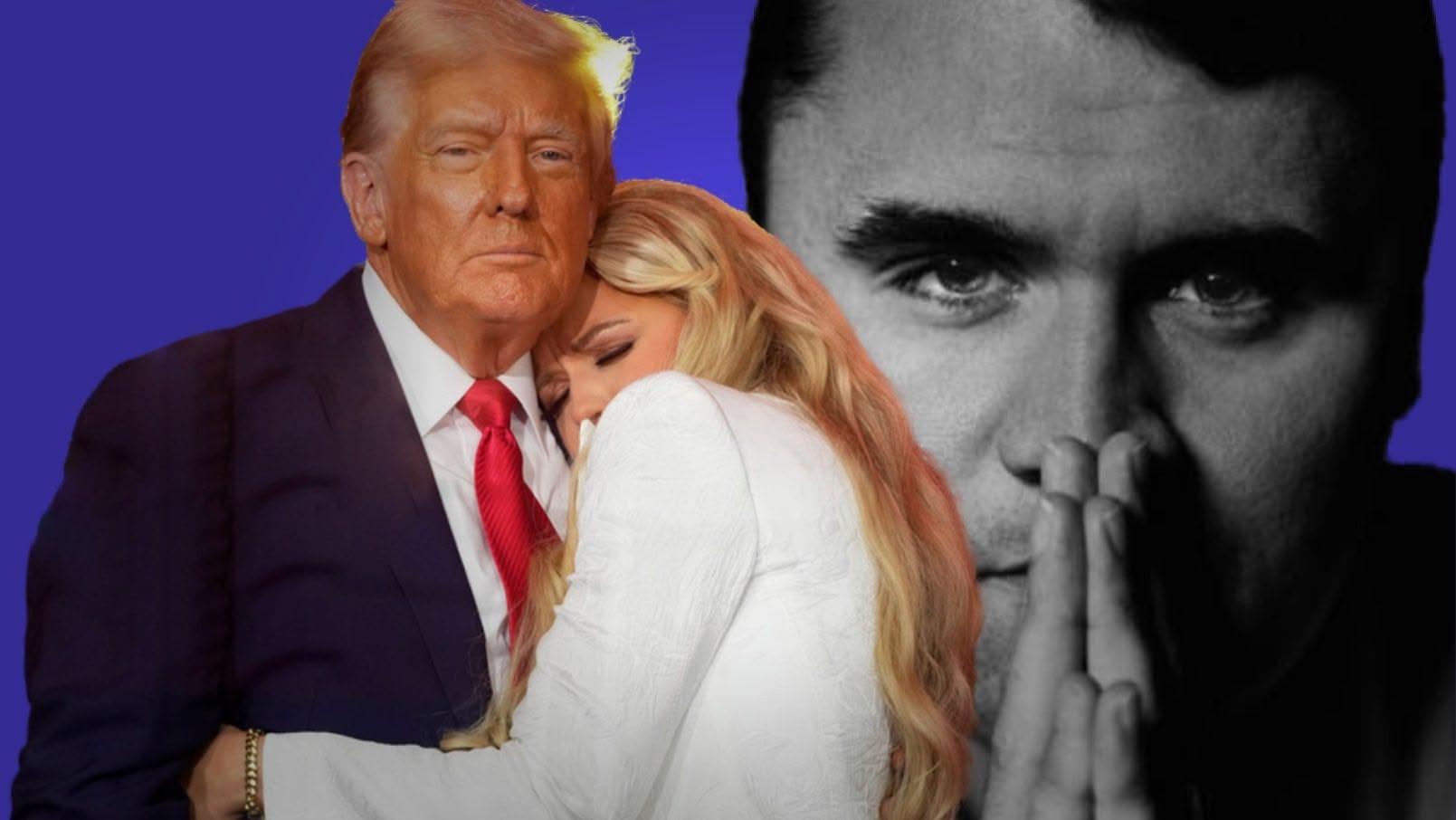
Charlie Kirk’s death has sparked a torrent of grief, outrage, and political theatre. Vigils and memorials have painted him as a champion of liberty, a martyr for free speech, a victim whose killing symbolises the danger of political violence. Across social media, conservative leaders have demanded respect and silence from critics. The problem is that this isn’t the full picture - and it never was. To mourn Kirk without recalling what he stood for is not an act of respect, it is an act of distortion and deceit.
There is a basic human instinct to show decency when someone dies. Nobody deserves to be murdered, and it’s right to condemn political violence wherever it comes from. But public mourning of political figures is never just about grief. It is about shaping memory, fixing reputations, and building symbols. That’s exactly what is happening with Charlie Kirk. His allies - including Donald Trump, Nigel Farage and Boris Johnson - want him remembered as a fallen defender of freedom. The truth is far messier, and far less flattering.
Kirk spent his career presenting himself as the bold defender of free expression. He revelled in describing universities, journalists, and progressives as enemies of liberty. And he made a pretty penny doing so. But even some cursory research uncovers a long record of trying to shut down speech he didn’t like. Through Turning Point USA - the political movement he set up when he was 18 and which led to him becoming a close friend of Donald Trump and darling of the MAGA crowd - he created the “professor watchlist”, a blacklist of academics deemed too liberal or “woke”. He called for companies to sack employees who expressed support for Black Lives Matter, and he condemned affirmative action while suggesting the Civil Rights Act of 1964 had been a “huge mistake”. When critics of Donald Trump raised their voices, he argued they should be stripped of their platforms, even calling for the deportation of journalist Mehdi Hasan. His “free speech” credentials collapse under the weight of his own words.
This hypocrisy was not a sideshow, it was central to his brand. Kirk sold himself as the tribune of “ordinary Americans” while relentlessly punching down on minorities and vulnerable groups in society. His commentary on immigrants, Muslims, and LGBTQ people was grotesque, designed to provoke and dehumanise. He claimed immigration should be completely stopped. He said being gay was an “error”, and likened the Pride movement to encouraging drug addiction. In June 2024 he cited scripture about homosexuals being “stoned to death”, praising what he described as “God’s perfect law” on sexual matters. He labelled transgender people “perverted”, dismissed gender fluidity as a “lie that hurts people”, and called for nationwide bans on gender-affirming care, complete with “Nuremberg-style trials” for doctors. He even posted that “Islam is the sword the left is using to slit the throat of America”. These were not slips of the tongue. They were deliberate provocations, meant to poison debate and harden division.
Now, in death, those grotesque positions are being quietly swept aside. The people who once derided “cancel culture” are busy cancelling anyone who refuses to join the chorus of respect. Workers have been disciplined or sacked for posting critical comments about Kirk online. Politicians are demanding new highly authoritarian powers to clamp down on “hate speech” directed at his memory. The irony is stark: in the name of honouring a so-called defender of free expression, they are shrinking the space for speech. Kirk’s memory is being used to justify the very censorship he pretended to resist.
This double standard matters. If democracies turn every slain political figure into a saint, a potentially useful debate collapses into ignorant myth-making. We are left unable to weigh legacies honestly or to learn from the damage irresponsible or malign leaders cause. Kirk’s allies are not just mourning a friend - they are constructing a false narrative that elevates him as a symbol of liberty, while erasing the reality of his divisive and damaging record. We should all watch carefully how this unfolds and learn from it. How America chooses to remember Kirk will shape not just domestic debates about speech, but also international perceptions of whether the country is serious about holding to principle rather than partisanship. That matters when we are talking about a country that has traditionally been a close and powerful ally of the UK.
There is a way to navigate this moment without either dancing on a grave or submitting to hagiography (attaching undue reverence to an individual’s memory). It starts with clarity. Kirk did not deserve to be killed. Political violence must be condemned, wherever it comes from and whoever it targets. But that does not oblige us to pretend he was something he was not. He was not a neutral defender of freedom. He was a provocateur who thrived on division, contradicted his own rhetoric about liberty, and pushed grotesque arguments that harmed vulnerable groups. To acknowledge this is not cruelty, it is honesty. We should all have the courage to recognise that.
The stakes go beyond one man’s legacy. If Kirk is allowed to stand as the unchallenged symbol of free speech, the very meaning of that principle is at risk. Free speech is not about immunity from criticism or exemption from consequence. It is not about elevating one ideology above scrutiny. And it certainly is not about silencing opponents while demanding protection for yourself. Yet that is exactly how the debate is being framed in the aftermath of his death. Listen carefully to what Farage says on the subject.
So, I will not be mourning Charlie Kirk too much. I have sympathy for his wife and children and his close family and friends. I mourn the fact that political violence has once again poisoned public life. I mourn the fact that the conversation around free speech is being further twisted into a partisan weapon. But I cannot and will not mourn a false image of the man. He did real harm, and it matters that we say so. Democracy is not strengthened by selective memory. It is strengthened by telling the truth, even when it is uncomfortable, even when it cuts across the grain of grief.
Mourning cannot mean myth-making. Condemn the killing, yes. Respect the grief of his family, yes. But do not rewrite history. To do so would be to betray the very freedom of speech that Kirk’s allies now claim to cherish. And that, more than anything, is why honesty must come first.
Now, before you go, please take a few seconds to click the ‘like’ button at the top of this article (heart icon) and the ‘restack’ button beside it (circular arrows) - it costs you nothing and tells Substack that our readers value our work.
If you have thoughts prompted by this piece - positive or negative - please do leave a comment (click the speech bubble icon). Short and sweet or long and challenging, we read ALL comments we receive and respond to as many as we can.
And, finally, if you want to be first to read future articles, just click the ‘Subscribe now’ button below and select the ‘free’ option. (We don’t hide ANY of our articles behind the paywall - even our free subscribers get them all.)
Many thanks! 🙏
Totally agree with this thoughtful article, says everything I’ve been thinking, thank you
It's important to recognize what Kirk truly stood for--and it wasn't for free speech.