

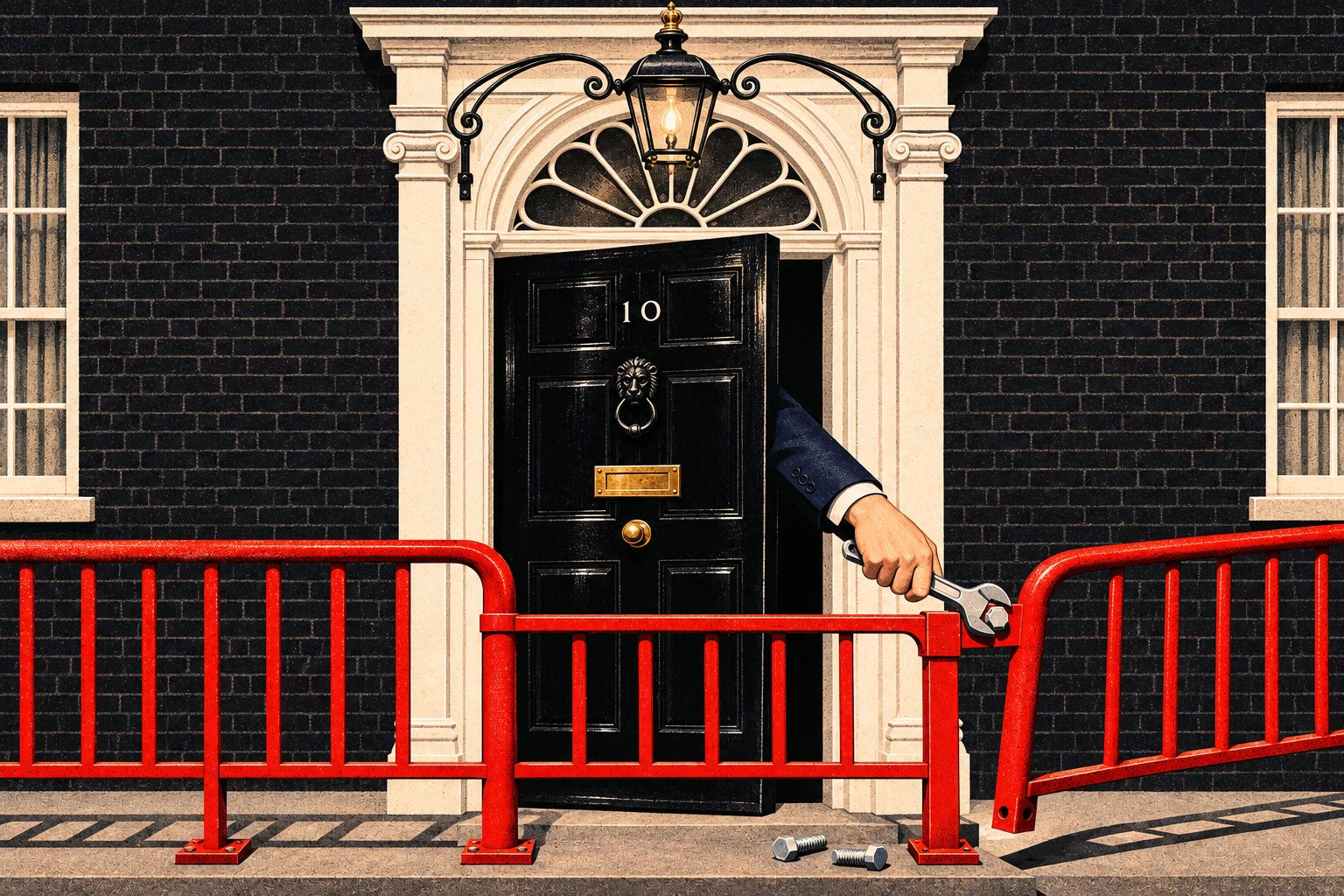
At the House of Lords Constitution Committee this week, peers questioned Morgan McSweeney, Keir Starmer’s former chief of staff, about how Britain protects itself against abuses of power.
McSweeney made a serious argument. Governments that cannot deliver lose public confidence, creating opportunities for populists who want to undermine democratic institutions.
His frustration is understandable. People elect governments to improve their lives. He describes a system that made doing so needlessly difficult, and he wants that to change.
He wants constraints on government powers reduced, while keeping what he believes to be adequate safeguards against abuse.
McSweeney’s evidence is inevitably coloured by his own experience of trying to make Starmer’s government deliver. Whatever people thought of Keir Starmer’s politics, my sense is that few expected him to go on a rampage through Britain’s constitutional safeguards.
I still find it reassuring to know that there were limits on what his government could do. The powers of that office could one day be in the hands of someone with far less respect for the rules. We have to think about the constraints we would want in place then, too.
In arguing for fewer constraints on prime ministerial power, McSweeney pointed to existing safeguards that would remain. He argued that elections allow the public to decide who should form the government. Parties have a responsibility to choose suitable candidates. Parliament can impose limits, while ministers can refuse their support or resign if a prime minister overreaches.
I’m unconvinced those safeguards would withstand a prime minister determined to push past them.
Start with the parties. They are supposed to ensure that the people they put before the electorate are suitable for office. Yet ITV’s recent undercover investigation recorded racism by Reform candidates and one saying he had failed vetting twice and was still allowed to stand.
If a party can identify a problem and wave the candidate through anyway, its selection process offers less reassurance than the existence of a vetting procedure might suggest. The public needs protection when parties get these decisions wrong.
Then there’s the reassurance that the public choose who governs. First past the post can hand a prime minister a huge majority and sweeping power, even though most voters backed other parties. We get a vote, but we don’t get an equal say in who ends up in No. 10 with our current voting system.
Nor can an election every few years protect the public from everything a government does in between. By the next polling day, an administration may have changed the rules, weakened scrutiny and made itself harder to hold to account.
Cabinet resistance also depends on people making a choice. Ministers might confront a leader who overreaches. They might equally share the leader’s aims, fear the consequences of rebellion or decide that keeping their party in power matters more.
Relying on someone finding a backbone leaves an awful lot riding on the personalities of the day.
These weaknesses can reinforce each other. A party that tolerates misconduct can supply a compliant Cabinet and a parliamentary majority willing to defend it. Several supposed safeguards can fail together.
Lord Beith pointed to something that had already gone wrong. The last Conservative government passed a law requiring the Electoral Commission, our independent elections watchdog, to take account of the government’s political priorities.
Peers warned that this put the watchdog’s independence at risk. The government pressed ahead, and Parliament passed the law anyway.
The safeguards were already there. They didn’t stop it.
The elections bill now going through the Lords would scrap that power. Open Britain is working to make sure that happens. We’re still trying to undo a change those safeguards should have stopped.
That should weigh heavily in any discussion about whether those safeguards are sufficient.
McSweeney is right that democratic government has to deliver. People deserve functioning public services, decisions that respond to their needs and a political system capable of solving problems.
His concern about populists makes the case for effective safeguards more urgent. Making government work better cannot guarantee that the next person in Number 10 will respect the limits on their power.
A prime minister who knows exactly where those limits lie may respect them. Another may use that knowledge to work out which ones to remove first.
Our safeguards have to hold when someone gets into power determined to push past them.
That is when we need them most.

One only needs to look at the USA to see what can happen when a bad actor gets into power and installs a cabinet of unprincipled folk. There is perhaps more useful mileage to be had in the proposals from the 99 organisation.
It is an oddity, isn't it,that in a democracy a PM or their Chief of Staff can tell the electorate, in effect, "I am right and you are wrong"