

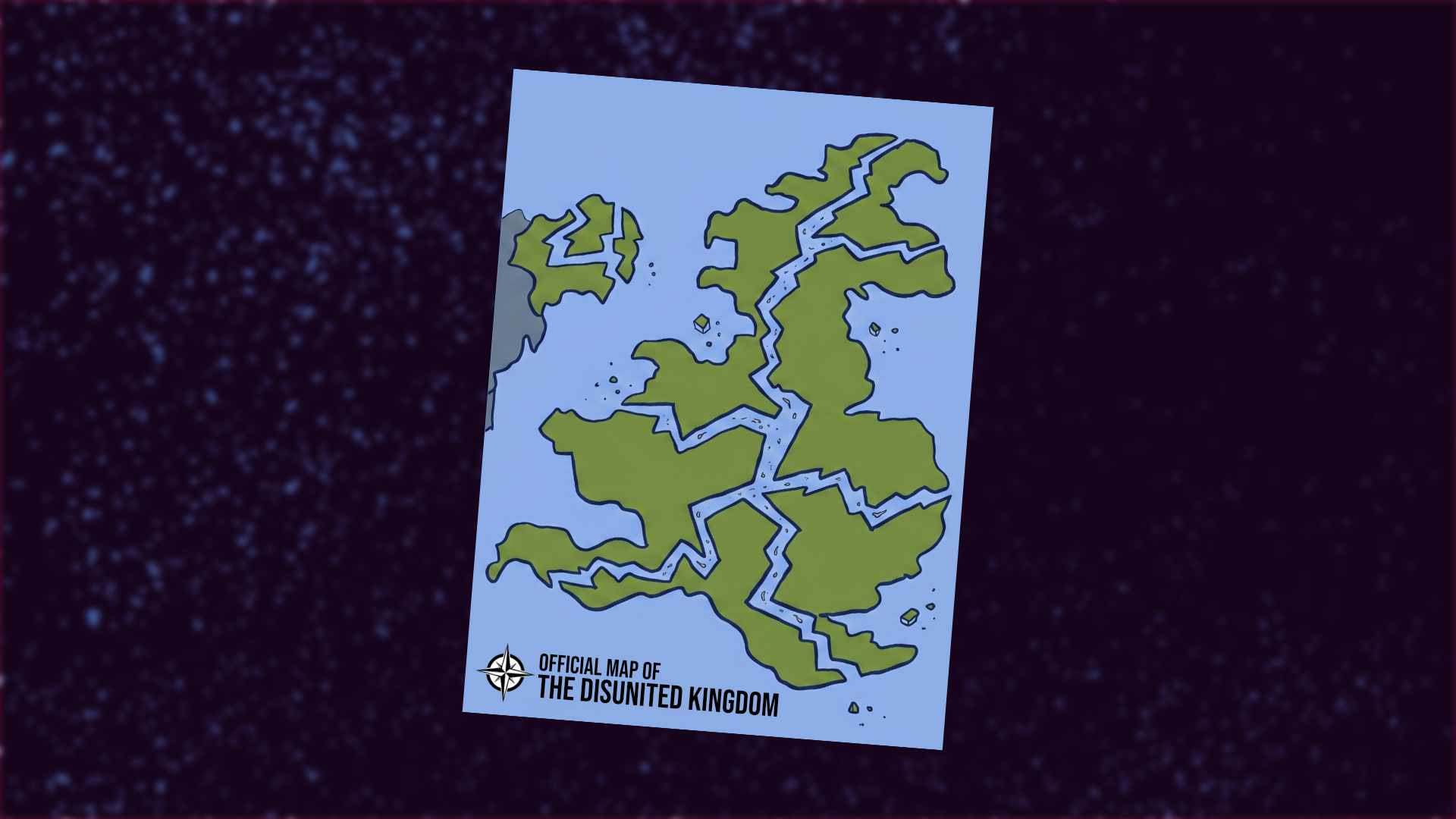
In a leaked memo last month, Keir Starmer told Ministers not to be “overly deferential” to devolved governments. He warned it “almost inevitably creates political challenges or missed positive opportunities.”
Polls show that he’ll have both in spades come devolved elections in Scotland and Wales on May 7th.
The SNP is projected to win an outright majority at Holyrood. Plaid Cymru roundly defeated both Labour and Reform UK in the Caerphilly by-election last October, and is now set to end Labour’s enduring rule over the Senedd. And Sinn Féin already leads Northern Ireland’s power-sharing executive.
For the first time in the history of devolution, the three devolved nations are on course to be led by parties whose stated long-term aim is to leave the United Kingdom. And this doesn’t seem to be a repeat of 2014 black-and-white referendum politics. The nationalist parties are bound by a deep shared frustration with the Starmer Government and with Westminster more broadly. It goes beyond gung-ho independence activism and into the realm of plain old discontent.
The three parties are coordinating on policy - from public spending and taxation to welfare and EU relations. At the least, they’re certainly set to give the embattled Starmer Government a historic headache.
But perhaps that Starmer memo shines a light - at least in part - on what’s happening here. The PM wrote that he wanted his Government to be “confident in our ability to deliver directly in those nations, including through direct spending, even when devolved governments may oppose this.”
Last winter, Starmer used legislation designed by Boris Johnson specifically to thwart devolution (the Internal Markets Act) in order to fund the Pride in Place scheme in Wales, bypassing the devolved government entirely. Understandably, it severely irked backbench Labour members of the Senedd who were set to hold their ground against a rising Plaid Cymru.
In a letter to Starmer in December, eleven backbench Labour MSs called it a “constitutional outrage.” Welsh Labour, they added, had “raised expectations” about further devolution, and accused the Government of “not only not progressing these but rolling back the existing devolution settlement.”
Scotland has seen the same pattern, just less neatly packaged into a single row. Since Brexit, Westminster has increasingly funded projects directly through levelling up and Shared Prosperity schemes, bypassing Holyrood and dealing instead with councils and local bodies. Ministers defend it as “delivering for Scotland”. But the SNP - like lots of voters in Scotland - see it as proof that devolved power exists only at London’s discretion.
The essence of this issue is that successive governments have failed to take devolution seriously. To often in Westminster it is viewed more as a pesky administrative exercise than a serious democratic project. Voters, who do genuinely care about regional autonomy from Westminster, can clearly sniff that out - and it’s not like Starmer’s made a particularly compelling or even coherent case for his philosophy on these matters.
But to focus all of this on devolution squabbles alone is to ignore the even bigger elephant in the room. Britain’s two-party political system has all but imploded. The pendulum swing between Conservative and Labour - that reliable alternation which defined the past century - does seem to be at its end. This is what comes next.
Things have already been getting weird, right? Reform UK rose from the fringes to the top of the polls, and more recently we’ve seen Zack Polanski’s newly revitalised Green Party come crashing out of the gate to win the Gorton and Denton by-election in a stunning upset. We’re in utterly uncharted waters now, but the immediate results are predictable.
People across the political spectrum are searching for alternatives. They still don’t trust the Conservatives, and they don’t trust Starmer’s Labour either. Plaid, the SNP, and Sinn Féin are offering up their pitches. You’ll notice that much of their rhetoric today has far more to do with the cost of living and specific local issues than loud calls for “independence now!”
Under the Senedd’s new - highly proportional - electoral system, the Greens and of course Reform are also expected to be competitive, with Polanski’s party set to be the “kingmakers” - potentially power-sharing with the Welsh nationalists at Plaid.
I’d put it this way: there’s long been an inverse relationship between the level of shambles in Westminster and the popularity of nationalist parties. In the eyes of many voters, they stand apart from Britain’s political establishment - the ultimate protest vote, with independence as the ultimate leverage over a distant centre.
And for that reason, I’m not convinced we are truly headed for a Disunited Kingdom should Plaid and the SNP win in May. What we are headed for is a verdict - on Westminster, on Starmer’s Labour, on Reform UK, and on a creaking political settlement that’s on its way out the door.
The politically adept answer to this moment isn’t to centralise harder or to shout louder about the Union or fear-monger about a break-up. It’s to make this union something worth being part of, something democratic and truly devolved. Something that treats its constituent nations as worthy of sharing power with, not as subjects to be controlled from on high.
The importance of Welsh and Scottish elections this May, Starmer wrote to Ministers, “cannot be underestimated.” He’s right. But probably not for the reasons that he thinks.

Proportional representation may be needed to stabilise the UK.
I think your post is spot on. I trust the Labour government more than the previous Conservative government but there are areas where I don't trust it at all. I am not an ardent independence supporter and could be convinced to vote for Labour if I thought they were genuinely governing in the best interests of all of the nations, but they are not. I will therefore be voting SNP/Green in the upcoming Scottish elections.