

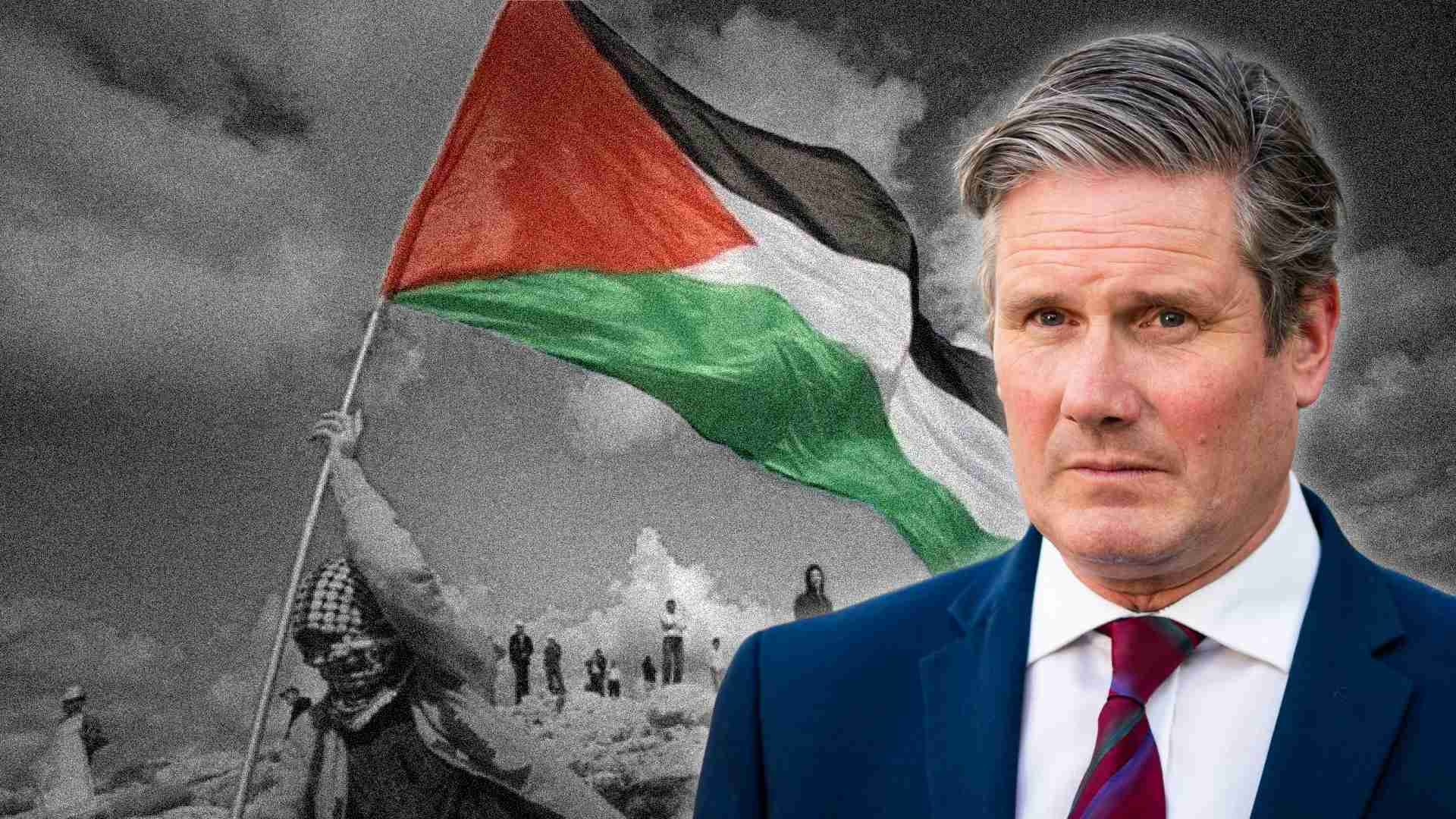
The announcement this weekend that the UK, Canada and Australia now formally recognise Palestinian statehood shattered a 77-year diplomatic consensus. It marked the first time major Western powers with historical links to the region have taken this step and very publicly broke with the United States’ position on the issue. For Britain, this represents a particularly striking reversal - 108 years after the Balfour Declaration promised a Jewish homeland in Palestine, the same nation now formally acknowledges Palestinian sovereignty.
This isn't routine diplomatic positioning. Since Israel's creation in 1948, Western allies have maintained that Palestinian recognition must come only as part of negotiated peace settlements. That wall of consensus has now cracked, and the implications extend far beyond symbolic gestures. Whether this rupture accelerates humanitarian relief and long-term peace - or deepens the current crisis - remains entirely unclear.
The Perfect Storm
Multiple pressures converged to make this moment perhaps inevitable. Gaza's humanitarian catastrophe has created unsustainable political pressure on Western governments, a pressure felt particularly by Starmer’s administration. With over 65,000 Palestinians killed and 90% of Gaza's population displaced, public opinion has shifted dramatically. Meanwhile, the current Israeli government has explicitly rejected two-state solutions, with Finance Minister Bezalel Smotrich recently proposing to annex 82% of the West Bank.
But the decision didn’t come out of the blue - Ireland, Norway, and Spain recognised Palestine in 2024. France has announced similar intentions. What changed was that major Commonwealth allies - nations with deep historical ties to both Israel and the Palestinian territories - finally joined this movement. The dam didn't just crack; it burst under accumulated pressure that governments could no longer contain.
Yet this convergence makes outcomes even harder to predict. Recognition driven by current humanitarian outrage and domestic political pressure may lack the strategic coherence needed for meaningful policy change.
Immediate Fractures
Reactions to the announcements reveal how profoundly this decision reshapes diplomatic geography. Israeli Prime Minister Benjamin Netanyahu responded with barely contained, characteristic fury, vowing "there will be no Palestinian state west of the Jordan River" and promising retaliation. His government labeled the recognition a "massive prize to terror" and a “reward for Hamas."
Crucially, the United States now finds itself increasingly isolated. President Trump explicitly disagreed with Starmer during their meeting at Chequers last week, calling Palestinian recognition among their "few disagreements." As France and potentially other nations follow suit at this week's UN General Assembly, America faces an uncomfortable choice: double down on supporting Israel's position or signal unprecedented divergence from a key ally in the Middle East. (The latter looks highly unlikely for this MAGA regime.)
The European split is equally telling. While France looks certain to join Britain in recognising Palestine, Germany and Italy have explicitly refused to follow suit, believing recognition should emerge from negotiations rather than precede them. This fracture within NATO and EU allies complicates any future coordinated Western approach to Middle East diplomacy.
Perhaps most significantly, the Palestinian response has been notably cautious. While Palestinian Authority President Mahmoud Abbas welcomed the move as "an important step toward peace," others emphasised that recognition means nothing without concrete changes on the ground. Hamas cynically praised the decision while simultaneously rejecting demands that it play no role in Palestinian governance.
The Accountability Test
The real impact of this formal recognition depends entirely on what follows now. Several concrete indicators will reveal whether this represents meaningful change or empty symbolism.
Most immediately, watch for embassy upgrades. Britain has already changed its official language from "Occupied Palestinian Territories" to "Palestine" on government websites. If Palestinian missions in London, Ottawa, and Canberra become full embassies with enhanced diplomatic status, recognition gains practical meaning.
Arms sales policies offer another crucial test. Will these countries now condition military exports to Israel on respect for Palestinian sovereignty? Britain has already paused free trade talks with Israel; whether this extends to comprehensive policy reviews will signal serious intent.
International legal proceedings present perhaps the most significant opportunity. The International Criminal Court has issued arrest warrants for Netanyahu and former Defence Minister Yoav Gallant. Whether recognising countries now feel obligated to enforce these warrants - or at minimum restrict Israeli officials' travel - could transform recognition from symbolic gesture to concrete accountability measure.
Medium-term indicators include whether more countries follow suit, how effectively the Palestinian Authority leverages its enhanced status, and most importantly, whether any of this translates into improved humanitarian access to Gaza or reduced settlement expansion in the West Bank.
The fundamental question isn't whether recognition immediately creates a Palestinian state - it doesn't. It's whether enhanced Palestinian legitimacy creates new pressure for the humanitarian access, ceasefire arrangements, and eventual negotiations that might actually reduce suffering and bring peace closer.
The Bigger Gamble
This diplomatic earthquake forces a central question: Has recognition made peace more or less likely? The honest answer is that nobody knows. Recognition might increase short-term tensions while creating long-term pressure for serious negotiations. Alternatively, it might entrench positions further while providing cover for continued inaction.
What matters most is whether this change produces tangible improvements in the humanitarian crisis devastating Gaza and reduces the instability consuming the West Bank and wider region. This formal recognition's ultimate value depends not on diplomatic theory but on whether it creates pathways to stop the immediate suffering and establish sustainable security for both peoples.
We're about to discover whether international pressure can still shape behaviour in an increasingly fragmented world - and whether moral declarations can be transformed into practical progress toward the peace that remains as elusive as ever.
Now, before you go, please take a few seconds to click the ‘like’ button at the top of this article (heart icon) and the ‘restack’ button beside it (circular arrows) - it costs you nothing and tells Substack that our readers value our work.
If you have thoughts prompted by this piece - positive or negative - please do leave a comment (click the speech bubble icon). Short and sweet or long and challenging, we read ALL comments we receive and respond to as many as we can.
And, finally, if you want to be first to read future articles, just click the ‘Subscribe now’ button below and select the ‘free’ option. (We don’t hide ANY of our articles behind the paywall - even our free subscribers get them all.)
Many thanks! 🙏
Mark, you have a way to cut through the BS and report without bias (I wish the BBC could do the same). It's time to hold the Government of Israel to account for the crimes it has perpetrated since 1948 (and before). Our government should be refusing to sell arms to Israel, expel the ambassador and close the embassy until they comply with International Law.
Where was the State of Israel created in 1948? = PALESTINE!
https://i.pinimg.com/originals/e5/74/6e/e5746e7e525770b28184ad9e26e948ee.png
The state of Palestine already existed since before 1948 when the British army was occupying the place.
From 1948 onwards, Jewish people from around the world came to live in this newly invented country called 'Israel' it was created in a sympathetic act against the then recent Nazi atrocities perpetrated on the Jews, Gypsies & other minorities. The latter were not welcomed in Israel, only the Jews.
As a traumatised people, given a new home in another people's country, one of their first acts was to attack their hosts and renege on the treaties that the British had arranged in order to give these poor people a home.
https://www.aljazeera.com/wp-content/uploads/2020/06/nakbamap.jpeg
From the beginning the Israelis have persecuted the established Palestinian population who had been forced by the British occupiers of Palestine to give up some of their country to create this new country called Israel.
https://s3.amazonaws.com/libapps/accounts/36419/images/mapcard-palestina-1946-today.jpg
This abuse of the blameless Palestinians of 1948 by the traumatised, abused Jews of WW2 has to stop. The Israelis need to be healed of their ancient trauma and helped to live like decent human beings, giving respect to all other human beings.