
The Death of Rigorous Policy Debate
Britain’s political culture is collapsing into outrage, symbolism and psychodrama

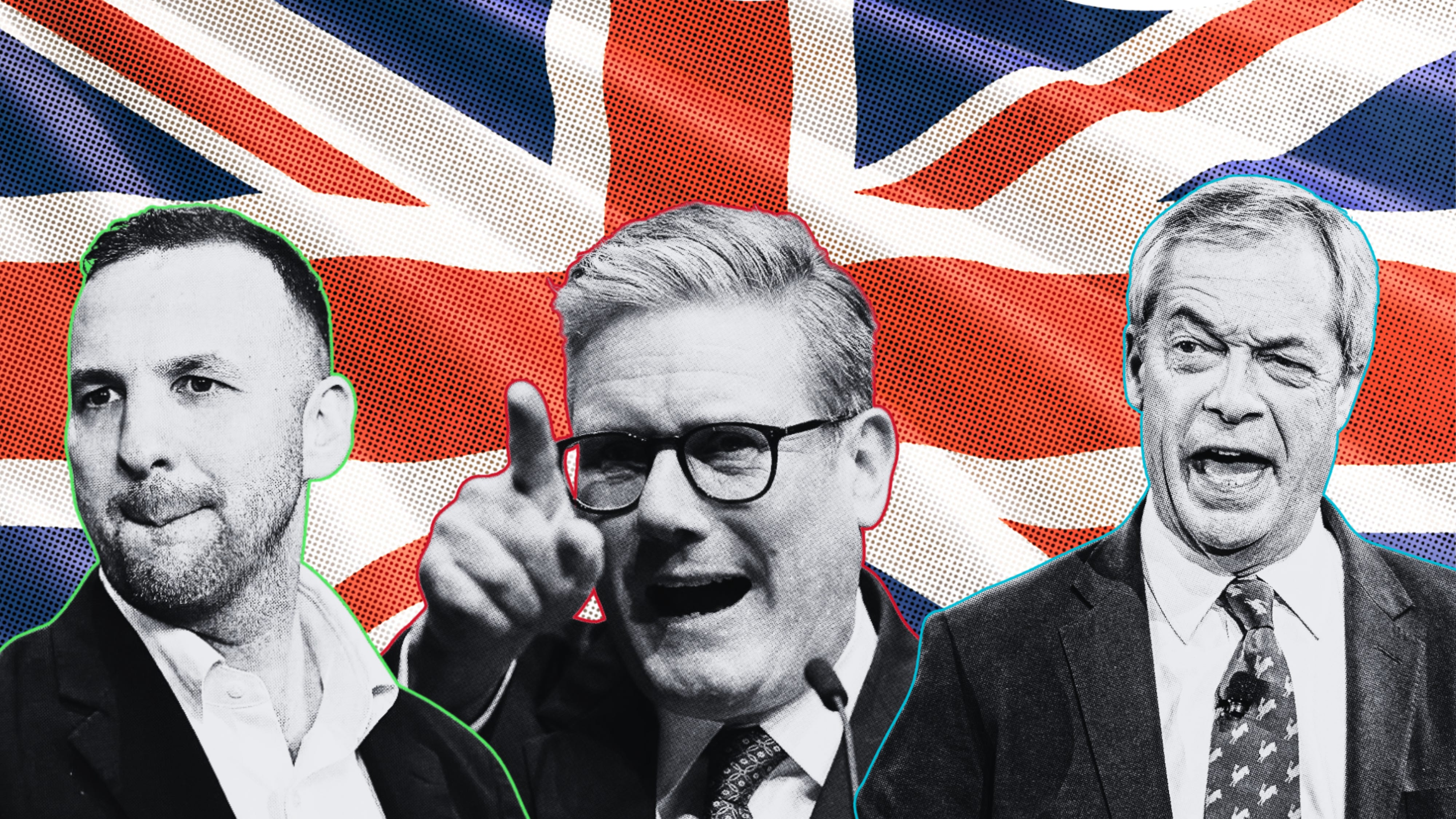
There are a lot of valid policy questions that Green party leader Zack Polanski should answer, but none of his opponents or media interlocutors ever seem to ask them. It’s just one symptom of a malignant civic disease – one on full display ahead of local elections today. Britain can no longer engage in meaningful policy debates.
I’m personally sympathetic to the Greens’ broad message of hope. But as a newly resurgent party that’s still getting its act together nationally, policy and expertise is a weak spot. Given their rise in the polls and their bold promises – many of which would necessarily involve local planning and funding – no one is really taking them to task.
Under normal circumstances, this would be a valuable opportunity for the embattled Labour Party. But instead of asking Polanski how his party would build housing en masse, reform the planning system, manage trade-offs between environmental protections and infrastructure expansion, or fund ambitious local investment programmes, Labour has mostly defaulted to the same shallow moral and identity arguments that now dominate almost every political conversation.
Starmer instead paints the Green Party as “extremist,” “divisive” and “sectarian.” Polanski – the Jewish leader of a multicultural and progressive party – has mainly been discussed in the media lately in terms of debates about Islamic extremism and antisemitism. While there are of course real and valid concerns there, the political goal has seemingly become to morally contaminate Polanski – to taint him with fears about extremism and social fragmentation – rather than challenge him substantively on policy. (And he should absolutely be challenged!)
As London Mayor Sadiq Khan warned the Prime Minister last month: “Don’t call Green voters extremists… They’re people who are progressives. They may not agree with us on all these issues, but we should try and court them and win them over.”
Reform UK also benefits enormously from the disappearance of substantive political scrutiny. Farage is rarely pressed in sustained detail on how Reform’s promises would actually function in government – whether on deportations, the NHS, public services or economic growth. The party thrives in an environment where emotional resonance matters more than expertise or well-considered policy.
In fighting election campaigns, what we get from Reform UK is a sort of anti-politics. On paper, they should be the party most eager to debate the Greens – on net-zero costs, on infrastructure delays, on the practical limits of localism. We hear little of that.
Instead of sparring with Polanski over energy economics or planning law, Reform’s campaign machine defaults to a different register: culture war, race-based fear-mongering, and the vague notion that the Greens represent an all-encompassing ‘wokeness’ that will destroy Western civilisation.
When their activists do mention the Greens, it’s rarely about specific green belt trade-offs or housing targets. It’s jumping and shouting about “family voting,” calling people islamists and communists, or implying their opponents are alien and un-British. The goal was never to win the argument, but to render any real discussion impossible.
In a sense, Reform UK’s approach to the Greens has increasingly become the norm across British politics. The end result of all this is that no one really learns much. We won’t ever find a new consensus. The huge questions we need to address about this country’s future – from our relationship with Trump’s America to green energy investment to housebuilding to industrial policy to immigration – don’t really have a forum for genuine debate anymore. It’s all just noise and psychodrama.
Unfortunately, there is no singular cure for this 21st century democratic affliction. We have allowed the institutions that once mediated political disagreement – local journalism, mass-membership parties, civic associations, churches, trade unions and a trusted public sphere – to steadily decay. In their place we have built a hyper-nationalised, algorithmically driven politics that primarily rewards performative outrage.
First-Past-The-Post is making things much worse. A fragmented five-party system operating through an electoral model designed for two broad coalitions creates permanent incentives for fear-based campaigning. Low-turnout local elections fought on narrow margins reward polarisation, smears and threats (exemplified by Reform UK pledging to build migrant detention centres in Green Party constituencies).
Money and lobbying are also relevant here. Political movements increasingly function as marketing operations sustained by donors, consultancies and online engagement metrics. Under those conditions, it is far easier to mobilise voters through cultural panic or emotional identity than through detailed arguments about planning reform, grid infrastructure or local government finance.
What is clear on polling day today is that Britain can’t go on like this. An open, pluralist and confident country depends on citizens being able to disagree constructively about difficult questions without treating opponents as existential enemies or moral contaminants.
In a proper democracy, both the Greens and Reform UK would be answering hard questions all of the time. But the system we have now is a boon to the populist right’s grievance politics, and a barrier to policies that could drive our futures and make our lives better.

Spot on. It's largely the result of the mainstream news media being owned by a small clutch of oligarchs.
This is a great analysis. Instant subscribe and restack!
It is possible to edit serious policy, even quite controversial policy into concise communication though, cf Mamdani, Polanksi as a recent examples. What you need is
(a) great comms skills
(b) an actual clear policy that you can describe in a few words (Greens are severely lacking beyond the big headlines, Reform will never have this)
(c) message discipline and endless repetition
(d) fair media coverage, or at least a chance to get some coverage
As a lifelong dues-paying Labour supporter it is pretty irritating to see them sh*t the bed on this so consistently, but to be fair to Starmer he is forced by media to spend most of his time discussing various scandals or relationships. However a good communicator can leverage hostile or irrelevant lines of questioning to promote policy. It's actually great for progressive taxation that mainstream media find it triggering.
This is not to say that I don't heartily agree with you that we have lost something, and it's worth fighting to get back the long debate, the public event, the non-soundbite. What is so compelling about Greens and Democratic Socialists is they want more civil discourse and community action as well... but they are also delivering the most powerful social content.