

💥 NOTE: This piece was published at 2.52pm on Thursday 22 January. At around 4pm, Andrew Gwynne announced that he DOES intend to stand down as MP for Gorton and Denton. 💥
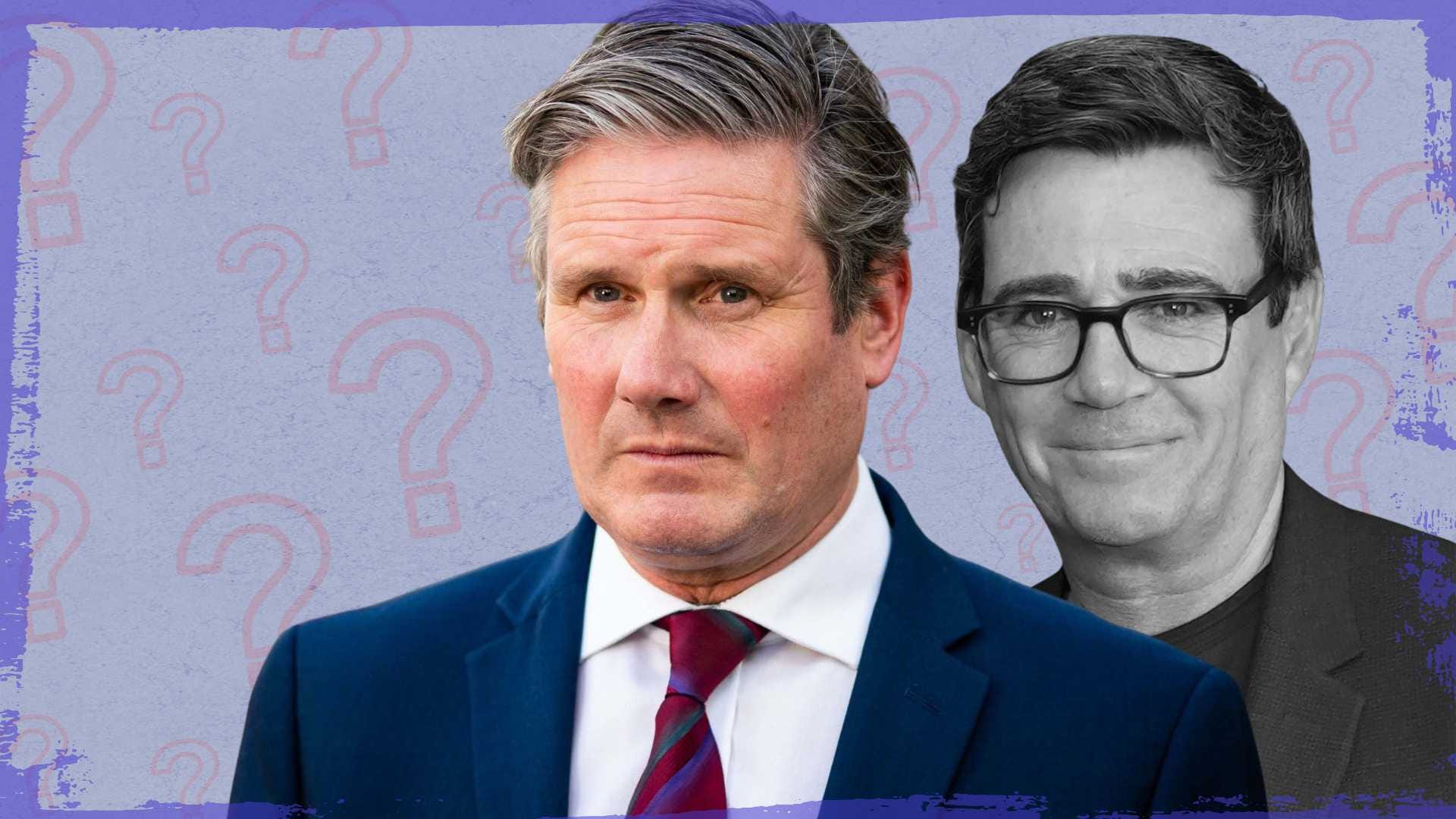
This morning, reports emerged that Andrew Gwynne MP has agreed a deal with the House of Commons that would allow him to retire on medical grounds and receive his pension. If he resigns in the coming days or weeks, it would trigger a by-election in Gorton and Denton on May 7 - the same day as local elections across England. This news has triggered a flurry of media stories stating that this could be Andy Burnham’s path back to Westminster and, eventually, to a leadership challenge against Keir Starmer.
The leadership speculation is being extensively covered elsewhere. I’m not going to add to all the tea-leaf reading about whether Burnham will run, whether the NEC will block him, or whether Angela Rayner has cut a deal to back him in exchange for a return to the Deputy PM role.
What I want to focus on is what Burnham has actually been saying - for months now - about how British politics should work…because what he’s been saying is striking, and very much in line with the democratic reform Open Britain is calling for.
At the 2025 Labour Party conference, Burnham gave a fifteen-minute speech at a rally for proportional representation organised by campaign group Labour for a New Democracy. (He was supposed to speak for two minutes. The overstay wasn’t accidental.)
He described himself as having “the zeal of the convert” on electoral reform. He explained that standing for Mayor under the Supplementary Vote system - after sixteen years as an MP under First Past the Post - had fundamentally changed how he thought about democracy. Under FPTP, he’d spent elections shoring up his base. Under a preferential system, he had to find common ground with Liberal Democrat and Conservative voters to win their second preferences.
“It changes the conversation in a way that the public has always wanted it to change,” he said, “to solutions and collaboration and ‘can’t you all work together’ and ‘can’t you take a longer-term view about these things’.”
This isn’t a vague gesture toward reform. Burnham has articulated a specific package: proportional representation for the House of Commons, a senate of the nations and regions to replace the unelected Lords, and - notably - the abolition or radical reform of the whip system, which he argues disempowers MPs by requiring them to rubber-stamp departmental positions rather than exercise independent judgement.
At the same conference, he explicitly endorsed a National Commission on Electoral Reform - the central ask of the All-Party Parliamentary Group for Fair Elections (which you’ll recall Open Britain was instrumental in building). His argument: a commission would “lay the ground for a new politics” and “a better conversation with the public.”
The analytical frame Burnham has developed for this - what he calls “Manchesterism” - deserves more attention than it has received.
His argument is that First Past the Post, combined with the Treasury’s crushing grip on economic policy, creates a centralised system that serves neither MPs nor places. Power concentrates in London. Vested interests can manipulate decision-making because there are so few decision-makers to influence. And because governments swing between parties with wildly different priorities, long-term policy coherence becomes impossible.
“What I think a move to a proportional system would do,” he told the conference, “is it would allow new politics to come in, where parties that can agree can set a long-term approach - so repairing the basics, building the council and social homes that we need as a country over a ten-year period.”
This is not, in other words, electoral reform as a dry process concern for political obsessives. It’s electoral reform as the essential precondition for fixing things that people want fixed - housing, infrastructure, public services. The core system that determines whether the other systems can work.
Whether any of this matters depends on things that haven’t happened yet. If Burnham stays in Manchester, these remain interesting speeches from a regional mayor with no legislative power.
But if he returns to Westminster, wins a by-election, and mounts a leadership challenge, they become something else entirely: commitments that will be tested. We need to be ready for that.
Undoubtedly, there are reasons for scepticism. Politicians have discovered democratic reform before and quietly forgotten about it once in power. Tony Blair promised a referendum on electoral reform in 1997; it never happened. Gordon Brown supported it in opposition; in government, other priorities emerged. The pattern is familiar and depressing.
But there are also reasons to pay attention. Burnham’s positioning is unusually specific. He’s not offering vague sympathy for reform but a concrete package with named components. He’s made these commitments publicly, repeatedly, and recently - not a decade ago when he was a backbencher with nothing to lose.
And the timing is interesting. The Elections Bill - which will determine the rules for the next general election - is expected mid-February. The APPG for Fair Elections is the largest in Parliament, with over 150 members, fired-up and ready to act. The May 2026 elections will stress-test the current government’s agenda in ways that could reshape the conversation about what’s possible in future.
None of this means Burnham will run, or win, or follow through. But for those of us who think the current voting system is the lock on every door to a fairer, more prosperous country, it’s worth knowing that the politician currently dominating leadership speculation has positioned himself as an explicit advocate for picking that lock.
So pleased to read this and see that Andy Burnham has expressed what I have concluded: that parties of different colours should be able to find common ground and work together to find democratic solutions, for the benefit of the majority.
Whatever can be done to introduce PR is a must and needs to happen asap