

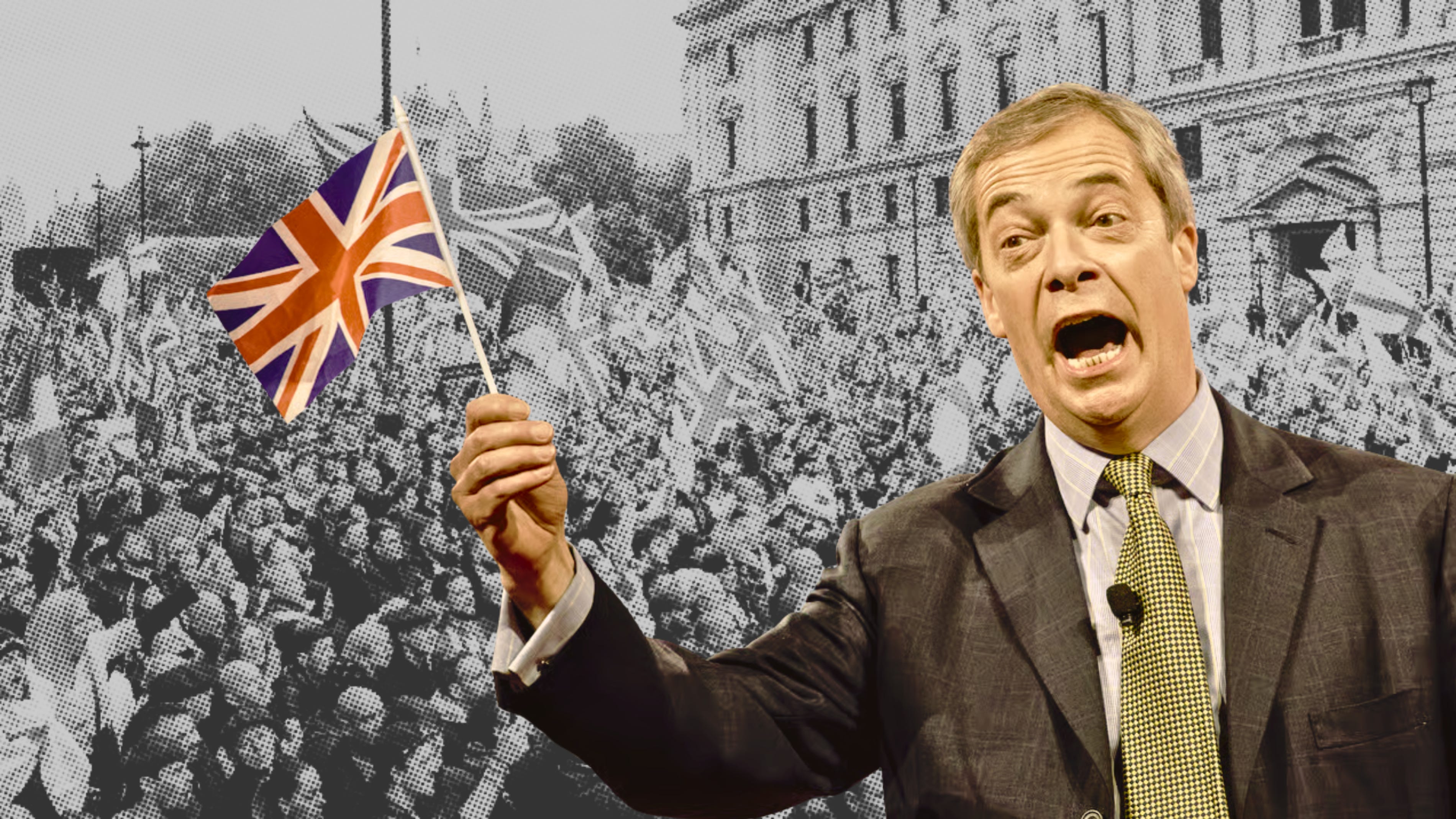
St George’s day – this past Thursday – generally marks the start of a peculiar season in British politics. Debates over English identity and patriotism are re-ignited and rehashed anew. Politicians play tug-of-war with a Union flag. It’s also a moment the far-right is quick to seize: rising tensions, scathing rhetoric, and the first portents of summer street unrest.
But for all the theatrics, we rarely get to have a sincere dialogue about what it means to be British (or English, for that matter). What we see is more of a branding exercise. A contest – surely designed to appeal to a familiar cohort of swing-seat voters ahead of May elections – to claim the colours for one’s political team. To paper over the harder conversations with polyester flags and anti-migrant grandstanding.
I’ll confess that I’m not the most ‘patriotic’ person, at least in the traditional sense – but I’m not alone. As Suella Braverman relishes in reminding us, just 41% of young people say they’re proud to be British, down from over 80% a decade ago. Only one in ten say they’d fight for this country (desire to fight in a war is a key indicator of patriotism, apparently).
Crucially, the polling shows that young people – generally a more cosmopolitan sort – feel alienated by a country they increasingly view as small-minded, exclusionary and, at times, racist. Perhaps more importantly, though, the pay to cost-of-living ratio is dire, the job market is atrocious, and home ownership and retirement feel like increasingly distant fantasies. Many, understandably, feel there isn’t a place for them here.
Reform’s solution is of course to double down. They’ve unveiled new plans to mandate flags in every school paired with an official portrait of the King. More substantively, they’ve taken yet another page out of Trump’s playbook and laid out a plan for “patriotic education” – a propagandistic curriculum that will pleasantly skip over the sordid bits of this nation’s storied past.
It’s said that authoritarians always want you to forget history.
And just a day after St George’s day, Farage declared war on what he calls “benefits Britain.” We simply can’t afford a welfare state, he said, echoing those familiar tones of austerity politics. “Yes, there’ll be riots, and there’ll be strikes and there’ll be protests, and we know all of that, but that’s what we’re going to have to do – it has to be done.” Spoken like one who truly loves his fellow Britons.
Suella Braverman would have us believe that we can simply mandate patriotism. That those in power can continue to ignore this generation’s social concerns and economic conditions, and simply shower them in flags and force their teachers to yell about how great Britain is. Good luck with that.
For Reform, patriotism is almost entirely about aesthetics, symbols, and slogans. There is little lurking beneath the surface. They have no true concept of what it is to be British in the turbulent 21st century, no vision of how to carry British values forward in practice. It’s just a pantomime, regurgitated iconography from a bygone age. A costume you can just put on – or, apparently, force the next generation to put on.
But having a costume to put on – being told who you are, who you hate, and what you stand for – is a lot easier than having to figure all of that out for yourself. There’s an allure to it that’s gripping people today.
For Labour’s part, they have tried for several years now to “reclaim” patriotism from the far-right. I admire the effort. Starmer, who also loves standing in front of large Union flags, accused Reform UK of trying to “hijack our flag and spread hate.” He called it “plastic patriotism that corrodes the very bonds that tie us together.”
He’s right, of course, but I’m not sure that it’s convincing to very many people. Talking about decency, unity, and service – as he so often does – can start to ring a bit hollow. Not least because it’s always in direct strategic reaction to Reform UK. It feels like a play to swing-seat voters, a defensive attempt to fend off allegations about Starmer’s “lack of patriotism” (one of Farage’s favourite accusations).
As former Green Party leader Caroline Lucas puts it so well: “All politics is a battle of stories – the tragedy is that, at the moment, the Government is not even trying to tell one.” They need a fresh narrative about patriotism, one completely separate from Farage and his movement.
Pair that with the Mandelson affair and Starmer’s broader lack of popularity, and it doesn’t feel like patriotism is really being reclaimed for good. It’s not clear that Labour really understands the allure of Farage’s patriotism. They don’t seem to grasp that people want answers from systems that have slipped out of their control.
It’s not something Farage would want taught in schools, but this country is steeped in a far richer patriotic tradition than flag-waving alone: the Levellers and Chartists who fought to expand early democracy; the suffragettes who won women the right to vote; the trade union movement that secured basic rights at work; the post-war generation that built the NHS and welfare state; and countless others who challenged injustice in the name of a fairer society.
I may not be much of a patriot in Farage’s sense, but that’s largely because I see national identity as a collaborative effort. The product of millions of us, deciding what we care about and what we value.
To truly reclaim patriotism, we need to reclaim democracy itself. Not just in the narrow, procedural sense, but as a living, participatory force – one that gives people real agency over their lives, restores a sense of shared direction, and makes the country feel like something we are building together rather than something being done to us.
No amount of flags, slogans or staged displays will fill the void.

Thanks Matt for articulating that but it's not just one generation, I speak on behalf of the post war boys and girls, born in '46, who lived through Thatcherism and have found all of our decades of subsequent political debate polluted by the right wing.
And guess what, it led this nation to unpopular farce that is represented by 'Starmerism' right now.
I could cry.
You mention democracy. The West is losing its democracy. The West is turning to CAPITALISM. Only the rich or sponsored get into Parliament, and the rich look after their own.
Farage is the worst of these, by far, but the other 652 all look the other way when the NHS is sold off scalpel by scalpel.
I did 37 years in the RAF as an aircraft engineer. I'm not proud of the British Empire or the colonialism that we forced on people. The way we duped them, and subjugated them. I was proud to serve my country, but I look at Reform UK Ltd and think what the hell was I thinking of.
We arrest people (many are oldies like me) who dare to stick up for a people going through genocide.
We have a government who "actively" supports the atrocious people who are commiting that crime.
Starmer, "had" a distinguished career as a human rights barrister, specializing in international law, criminal law. Where the bloody hell has that gone?
Lord Hermer (Richard Hermer KC), is under fire regarding the prosecution and investigation of British veterans who served in conflicts. This man is doing nothing for the drop in recruitment for the Armed Forces. I wouldn't sign on today.
The "Friends of Israel" donate to British political parties; They hold lunches to which MANY MPs go. Many of the top four Parties Labour, Conservative, Liberal Democrats, and Reform UK Ltd. attend these lunches.
I apologise for including Reform UK Ltd. as one of the four.
AIPAC run the USofA. It would seem that we are following closely.
NO! I'm not proud of this Britain. I am ashamed of it.
Dinga Bell