

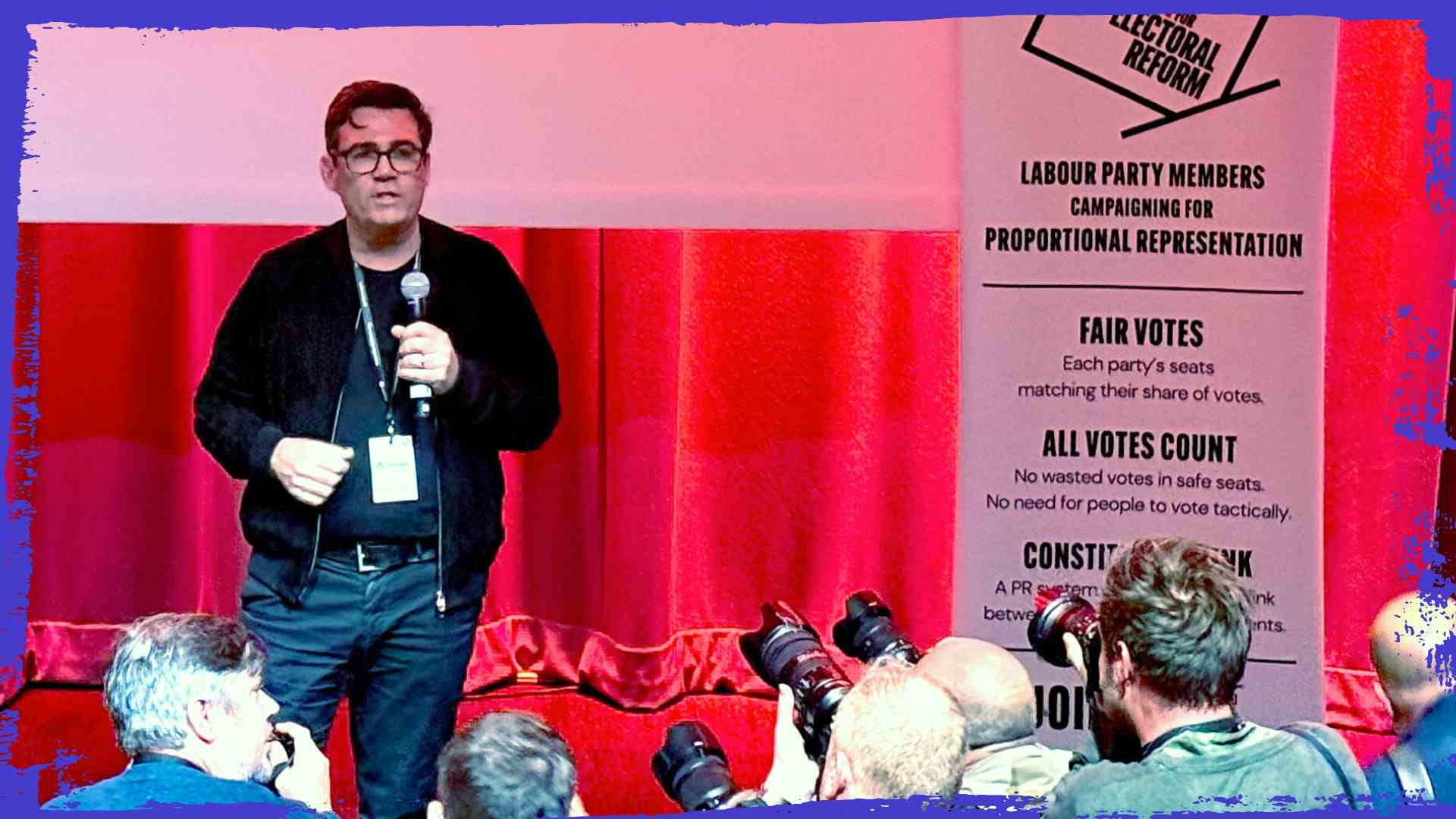
Well, it’s official. Andy Burnham has submitted his application to stand as Labour’s candidate in Gorton and Denton. He did so minutes before the 5pm Saturday deadline, ending days of speculation about whether he would actually make the move. So, the question is no longer whether Burnham wants to return to Westminster; it’s whether he’ll be allowed to try and what obstacles he will need to overcome if he is.
What lies ahead of Burnham is a gruelling and uncertain political assault course, with four key obstacles.
Obstacle One: The NEC
The 2026 Labour rulebook introduced a small but significant new requirement: directly elected mayors must obtain explicit NEC permission before seeking selection as parliamentary candidates. This new rule has the potential to stop Burnham in his tracks before he’s even hit his stride.
The decision rests with 10 NEC officers, including Keir Starmer himself, Home Secretary Shabana Mahmood, Deputy Leader Lucy Powell, and Party Chair Ellie Reeves. Recent media reports suggest a “Stop Burnham” campaign is underway among Starmer loyalists. If so, we could - could - see the NEC decide to impose an all-women shortlist or all-ethnic-minority shortlist, either of which would have the effect of blocking Burnham while avoiding the need for anyone having to explicitly vote against him.
But blocking carries costs. John McDonnell and Cat Smith have warned it would cause “immense damage.” The FBU’s general secretary said it would be a “democratic outrage.” UNISON has cautioned against “control-freakery.” And the corrosive narrative of a “London stitch-up” against a popular northern mayor writes itself (and you can be sure SOMEONE will write it).
So, the NEC faces a genuine dilemma. Permit Burnham to stand, and it opens a clear path to a leadership challenge. Block him through procedural manipulation, and it triggers exactly the kind of internal crisis it is trying to avoid - while still having to win a difficult by-election with an unknown candidate.
The decision is expected Sunday. We’ll soon see.
Obstacle Two: Local Selection
If the NEC permits Burnham’s candidacy, he must still win selection from local Labour members. The NEC controls the long-list and shortlist composition, so the process can still be shaped from above. But local support appears strong. Lucy Powell and Angela Rayner - both of whom have strong influence in the region - have publicly supported Burnham’s right to stand. Given his popularity in Greater Manchester - 67% in the 2021 mayoral election, 63% in 2024 - local members would likely back him if given the choice.
This gate looks less formidable than the first. The real question is whether he will reach it.
Obstacle Three: The By-Election
Even if Burnham makes it this far, he’s not home and dry. A by-election in Gorton and Denton is by no means a formality. Labour won the seat in 2024 with 50.8% and a majority of over 13,000. Comfortable in normal times…but these are not normal times.
In recent months, Labour’s national polling has collapsed to historic lows. More in Common’s MRP model shows Reform UK at roughly 30% in the constituency, with Labour at around 28% and the Greens at approximately 23%. And Reform has reportedly indicated it will “throw everything” at this contest - no one would expect otherwise.
Burnham’s personal brand could provide some insulation. He is not the Labour national brand; in fact, he has spent years distinguishing himself from Westminster. But insulation is not immunity. A by-election in the current climate, with the governing party in third place nationally, carries genuine risk, however popular the individual candidate.
There’s also the question of what happens if he wins. Burnham would need to resign as Mayor of Greater Manchester to take his Commons seat. That triggers a mayoral by-election - costing taxpayers an estimated £4.7 million and the Labour Party around £500,000. People will have views on that, especially in the middle of a cost of living crisis. More significantly, it hands Reform UK an opportunity to take this high profile platform, an opportunity that some Labour figures have described as potentially “totemic” for Farage’s party. That too will weigh in many people’s minds.
Obstacle Four: The Leadership Challenge
Assuming Burnham clears all these obstacles - NEC permission, local selection, by-election victory - he then enters the House of Commons as a ‘new’ MP. (Although he has been there before, the composition of the House and the Labour benches is vastly different to when he was last there.) What then?
Here Burnham’s journey becomes genuinely unprecedented. No sitting Labour Prime Minister has ever faced a formal leadership challenge. The closest parallel - Gordon Brown’s persistent unease between 2008 and 2010 - never produced a formal contest despite widespread discontent. This would be brand new territory for Labour and nothing can be taken for granted.
To trigger a challenge, Burnham would need nominations from 20% of Labour MPs - currently around 81 members. This is a high threshold, deliberately designed to protect incumbents. It requires MPs to make a career-defining decision: publicly backing a challenge against a sitting Prime Minister, with all the consequences for patronage, ministerial appointments, and future prospects that entails. Not a small ask by any means.
The Tribune Group, which includes over 100 MPs, has suggested that any challenge would “backfire” if launched too quickly. That’s in line with conventional wisdom which favours patience - establish credibility in the Commons, build relationships, let events make the case. But the May 2026 local elections loom as a potential forcing mechanism - catastrophic Labour results could shift calculations at lightning speed.
Then he’s in the hands of Labour’s membership. September 2025 polling showed 62% of Labour members backing Burnham over Starmer’s 29%. But membership has reportedly declined significantly since then - coinciding with the significant rise in Green Party membership that followed Zack Polanski’s election as leader - and those who remain may differ from those who left.
Conclusion
Looked at in the round, the rules, the numbers, and the precedents all suggest Burnham has a narrow path to the top job. Narrow, but not closed.
For those who follow Open Britain’s work, however narrow that path, there’s good reason to pay attention. As I wrote on Thursday, Burnham has positioned himself as an explicit advocate for democratic reform, not least in a fifteen minute speech during the 2025 Labour conference. In that Labour for a New Democracy event, he endorsed PR for the House of Commons and the idea of a National Commission on Electoral Reform. (One eagle-eyed reader in a position to know pointed out that Burnham had been allocated eight minutes to speak at that event, not the two I stated, but the general point I made stands.)
Clearly, these positions align closely with what Open Britain is campaigning for. If Burnham does reach a leadership contest, you can be sure he will be reminded of those commitments, by people within the Labour Party, by Open Britain and our friends across the democracy sector, and by supporters of democratic reform in the population at large.
When the NEC announces its decision on Sunday, it could end this story before it properly begins, or it could open the door - ultimately - to a fairer, more representative form of politics…and with it, a genuine opportunity to start fixing the many chronic problems currently plaguing ordinary people’s lives.
At least we don’t have long to wait.
The Labour Party needs Andy Burnham as an MP in Parliament, the country needs him, and the long-term health of democracy needs him. Fingers crossed, he overcomes those obstacles. 🤞
Unpopular Keir Starmer (with good reason), should accept popular opinion (I think that's called democracy), and make way for a true Labour politician. Andy Burnham fits the bill. I am not an exclusive Labour supporter although I am definitely well left of centre. My main concern is having someone in power; Labour, Lib-Dem or Green, who stands a chance of protecting us from Reform and the escalation of the far right. The UK is on very shaky ground right now, facing the danger of the populace sleep-walking into a potential autocratic, nazi-style regime. It will be too late when we see ICE-like melitia arresting innocent citizens, breaking into peoples' homes without a warrant and attacking and deporting innocent people. Don't think. "It Can't Happen Here". It most certainly could. We can not be complacent whilst Farage and his pals seem to be gathering ground. We see what's happening in America, and it's terrifying. We MUST stand up against the far right and make people aware of the danger of doing nothing. I am a 75 year old white British man and I desparately want the UK to stand up for Diversity, Equity and Inclusion - that's HUMANITY.