

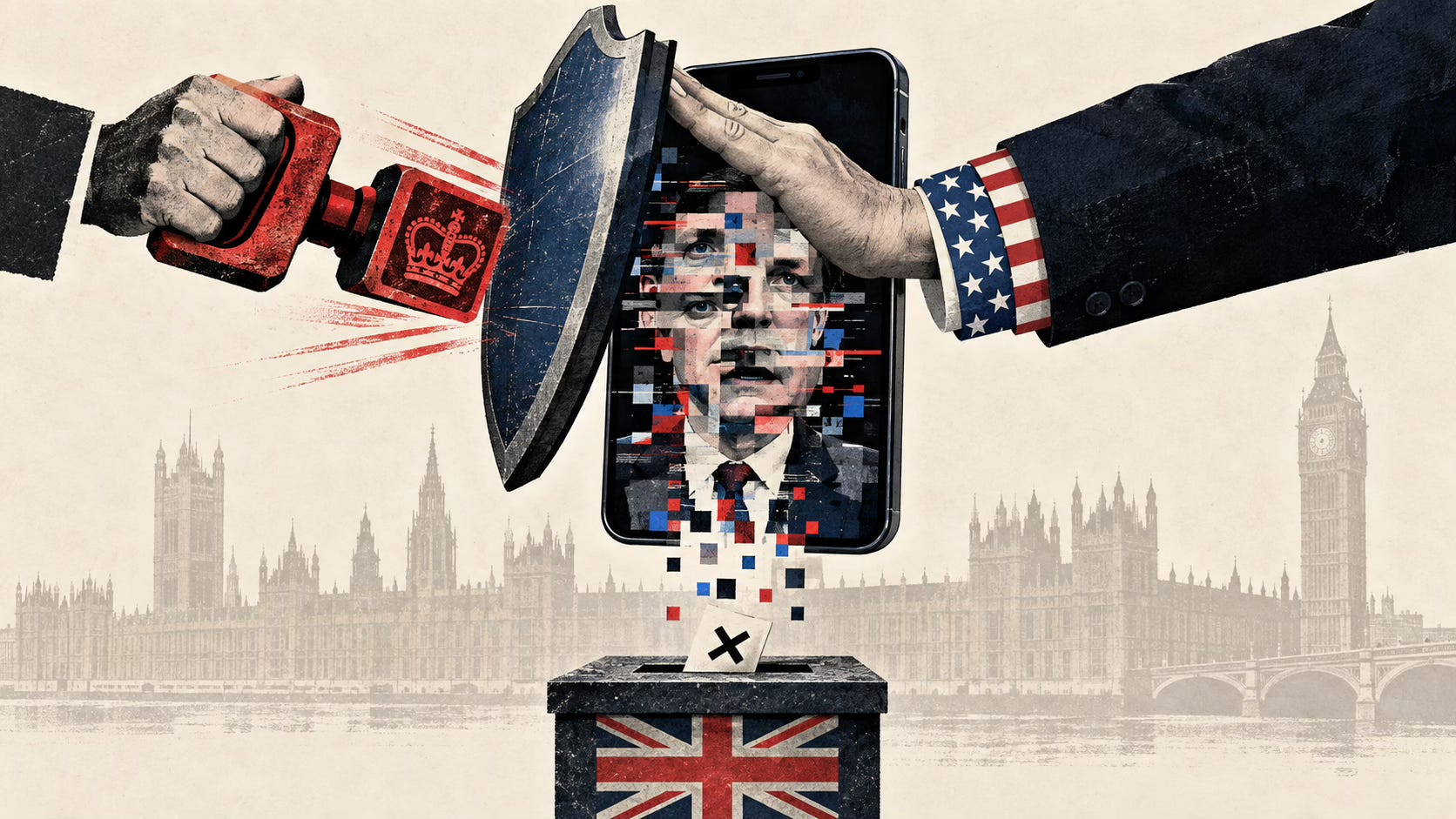
Voters are being asked to make democratic choices in an information environment that is failing them.
More than half of those surveyed after May’s elections in England said they had encountered misinformation. One in ten had seen a deepfake. These are no longer fringe threats. They are becoming part of how our elections are fought - while the rules and the platforms remain dangerously behind.
Voters should not be left to work out for themselves whether what they are seeing is real. The Electoral Commission has called for social media companies to take greater responsibility for the content their platforms amplify, and for election law to catch up with the use of AI.
Anyone wondering how urgent that is should take a look at what just happened at Meta.
An AI-generated video falsely showed a Scottish Labour councillor making inflammatory comments about refugees. She had never said them.
Meta left it online. Even after the case reached its own Oversight Board, the company insisted the video broke no rules and did not even need an AI label.
The Board eventually ordered its removal.
Taking it down was the right decision. It was also late. By then, the failure was plain: a platform capable of spreading a political deepfake at speed could not be relied upon to act against it. The people who had already watched it did not suddenly unsee it. The damage to the councillor’s reputation did not disappear with it. The lie had already reached voters.
The Oversight Board’s wider verdict was brutal. Meta’s protections against deepfakes were “consistently and fundamentally inadequate”.
When the referee you appointed calls your safeguards fundamentally inadequate, asking us to “trust the platforms” becomes a very big ask indeed.
Then Washington stepped in
The Government has, at least, started trying to put some rules around this mess. Those efforts include the Online Safety Act, the under-16 social media ban and plans to give trusted public-service broadcasters greater prominence online.
Washington has noticed.
PoliticsHome reports that senior British officials were called to the US embassy and challenged over all three. The priority in Washington was the impact on American technology companies.
A government source called the meeting “routine engagement”.
“Routine” is doing quite a lot of work there. Countries lobby each other all the time. Britain does plenty of it. But the line between diplomatic influence and foreign interference is not always easy to see. We are getting uncomfortably close to it here when it concerns our elections.
You should be able to tell whether the politician in a video really said those words. You should know who paid to put political content in front of you. Platforms should not be free to amplify convincing fabrications and shrug when the damage is done.
When a foreign government leans on Britain over those rules to protect companies headquartered on its soil, it is reaching into our democratic process.
“Routine lobbying” begins to feel like an inadequate description.
We have seen this pattern before
The embassy meeting did not come out of nowhere.
PoliticsHome then revealed that British diplomats had already reassured Trump officials that Andy Burnham would not launch a “clamp down” on American technology companies once he became Prime Minister.
Before Burnham had even entered Downing Street, British diplomats were making sure the Trump administration knew that US tech companies had little to fear.
Direct pressure from American officials is only part of the picture.
Regular Ugly Politix readers may remember our recent article on American influence in Britain.
We reported that the Free Speech Union International was in line for millions of dollars in US State Department funding. A confidential briefing from the UK organisation had urged JD Vance to press the British Government to pause the Online Safety Act and stop funding its anti-disinformation unit.
That is a British organisation asking the US Vice-President to lean on the British Government. The US Government are handing millions to lobbying organisations to fight the policy. American officials are now directly challenging British rules affecting the same online space.
The pattern is becoming difficult to ignore.
Say “foreign interference” and most people picture anonymous accounts, hacked emails and money moving through secret channels.
Modern influence can arrive through grants, policy briefings and embassy meetings. It can be completely visible and still place pressure on another country’s decisions about its own democracy. Seeing it happen does not make it harmless.
Whose democracy is it anyway?
American technology companies already exercise extraordinary power over Britain’s public debate. The US government is now using its influence to shape how Britain holds those companies to account.
Where are British voters voices in all of this?
Somewhere behind Silicon Valley’s business interests and Washington’s diplomatic priorities, apparently.
US officials are entitled to make their case. British ministers answer to the people who live, vote and stand for election here.
Friendship between countries does not come with a free pass to shape each other’s democracy. The rules of Britain’s democratic debate cannot be written in Silicon Valley and vetoed in Washington.

This is all incredibly depressing, but sadly, not surprising. I grew up not far from USAF Lakenheath and saw as a child the influence that the Americans had on the local community. Many thought that it was good that they boosted the economy, offering (usually fairly menial) civilian jobs to locals. Even then I had a grasp that all their real spending was in dollars on the base, and there was a subtle Americanisation going on - spelling on town notice boards etc. The overt messaging was that we poor Brits needed big Uncle Sam to look after us. I don't think the locals were too bothered when looking after us included storing nuclear warheads on base (obviously there were protesters, but not too many locals).
All of this was sixty years ago, and I only recount it because I think that the propaganda takeover of the UK by the USA has been going on a long time. It's not unlike the Russian programme of embedding long term sleepers into the US.
I have no idea how we extricate ourselves.
What is a democracy these days?
This article demonstrates that it is no longer a British democracy in the UK as it is subject to so many external forces, and their current whims, that we are held to ransom by overseas funding and global politics.
There is no longer any point in holding elections, voting or having a Parliament in little britain.
Ballot papers? Burn 'em!