

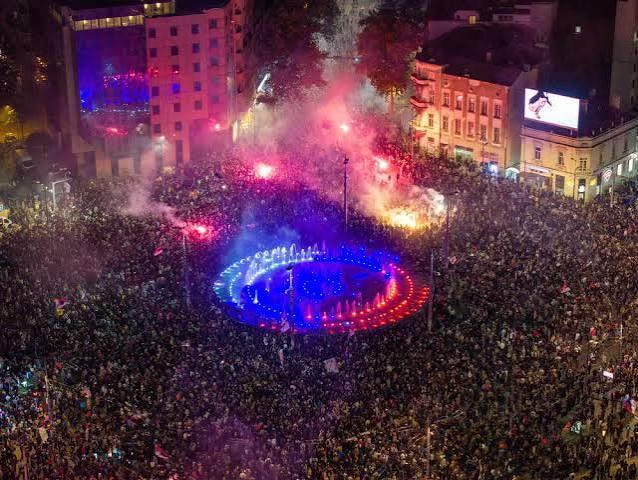
One week ago today, voters in Brazil and Serbia gave us something we have been short of lately - a reason to feel hopeful about democracy.
In Brazil, Lula defeated Flávio Bolsonaro to win another presidential term. In Serbia, a student-backed electoral list defeated Aleksandar Vučić’s governing alliance, ending 14 years of SNS-led government.
For anyone worn down by the apparent advance of right-wing authoritarianism, last Sunday was a reminder that its victories are never inevitable.
Facing intimidation, manipulation and the misuse of public power, people organised. They brought others with them. Political forces that had looked formidable were beaten at the ballot box.
There is hope in that. There is also a warning in how much people had to overcome to get there.
Giving people a way to act
In Serbia, the movement grew from demands for accountability after the collapse of a railway-station canopy in Novi Sad in November 2024, which killed 16 people. Students helped sustain a protest movement that drew in teachers, farmers and other workers, before backing a list of candidates to contest the election.
They were challenging a government with advantages that went far beyond incumbency. International observers reported intimidation, misuse of public resources and media coverage heavily favouring the governing alliance. Journalists faced threats and harassment. Voters’ ability to make an informed choice was being undermined.
Under those conditions, taking part in politics carries costs that nobody should be expected to accept.
Yet the students and their supporters kept finding ways to reach people. They visited villages, knocked on doors, held public discussions and organised cycling tours carrying copies of the constitution. They went to people who were unlikely to turn up at a political rally.
They built a movement where people could see a place for themselves in it.
In Brazil, the organising backed a sitting president facing the Bolsonaro movement. The stakes were serious. Flávio’s father, Jair Bolsonaro, had been convicted of plotting a coup to remain in power after losing the 2022 election.
False information also threatened voters’ ability to take part. Before the first round, a false audio message circulated on WhatsApp claiming that Bolsonaro supporters should vote on polling day while Lula supporters should wait until the following Sunday. A judge described it as objectively false and capable of affecting the integrity of the election.
A lie about when to vote can take away someone’s chance to have a say.
Lula’s supporters also used WhatsApp to organise. A channel led by congressman André Janones reached 10.8 million followers by the runoff. Supporters received daily tasks to help campaign material reach more people online. People who felt overwhelmed by politics could find something within their reach.
It should never have got this far
These results show what people can achieve together. They also show how much they had to overcome to exercise power that should already have been theirs.
Serbia should never have reached a point where people faced intimidation and a deeply unequal media environment while trying to challenge their government. Brazil should never have had to confront a plot to overturn an election, followed by another campaign in which false information sought to interfere with people’s ability to vote.
People’s resilience is no substitute for democratic protection.
Right-wing authoritarians can win an election, then use the power voters have given them to make it harder to lose the next one.
Under Trump, we’ve seen news outlets barred from the White House and journalists and broadcasters facing legal action over their reporting. In Orbán’s Hungary, election observers documented state-funded advertising and biased media coverage that gave his party an unfair advantage. Bolsonaro was convicted of plotting a coup to stay in power after losing an election.
Reform is giving us a preview of what that politics could look like in Downing Street. It is already stonewalling journalists whose coverage it dislikes and threatening to pursue others “relentlessly” through costly legal cases.
Their recent policy announcements threaten to abolish arm’s-length public bodies and restrict court challenges to ministers’ planning decisions.
Each weakened safeguard makes the next challenge harder.
For us in Britain, the time to strengthen democratic protections is before they are tested to breaking point.
Our authority depends on reliable information, a fair chance to be heard and votes that translate fairly into political power. Gaps in protection give those seeking unfair advantage room to operate.
Last Sunday gave us reasons to believe that people can push back against efforts to restrict their democratic choices. The organising behind those results shows how much people can contribute when they have practical ways to act together.
Their determination deserves to be celebrated. A democracy that works fairly should make fewer demands on it.

Cathy, I can't agree 'that a democracy that works fairly should make fewer demands upon it' because the post war experience is that we, the citizens/voters, have made too little demands of our politicians and allowed them to exercise their powers without enough consultation or restraint from the electorate.
In my judgement, we need a complete review of how we have been using our democratic processes in this country and what revisions might be required for the 21st century and the rapidly changing/expanding computer age.
NB I apologise for superficiality of this comment as I am tired and am falling behind intellectually in such a rapidly changing environment.